
Category: Advisory

  • Institutional Investors

    Institutional Investors


    Institutional Investors

    Meaning, Importance, & Types

    Institutional investors are large companies or organizations that pool and manage funds on behalf of clients and other beneficiaries. They play a pivotal role in shaping global financial market, influencing corporate governance, capital allocation, and asset prices. This category of investors are major participants in the investment/ financial market.


    Significance of Institutional Investors

    Some of the importance include, to:


    • Provide liquidity to investment or financial markets
    • Provide long-term investing to stabilize the markets
    • Fund large infrastructure, housing, and technology projects
    • Influence pricing, valuations, and market direction
    • Enhance corporate governance utilizing their voting power.

    Key Types of Institutional Investors?

    The common types of institutional investors include:


    Banks

    These are financial institutions that accept deposits and grant loans to those in need of it. When a bank receives deposits and the deposits have not been loaned out, this creates excess reserves. The excess reserves are invested in fixed income securities and money market instruments to earn a return on the excess reserves that will exceed the interest rate paid on the deposits.


    Insurance Companies

    These invest premiums collected from policyholders on securities or assets that will produce a good return to meet claim settlements. They focus mainly on stable, long-term, and low-risk returns. This kind of investments must be relatively conservative and liquid to meet claim settlements when the need arises.


    Pension Funds

    This is a scheme established by employers to invest retirement funds contributed by the employee and employer to provide a stable income during retirement. The employer is statutorily required to manage the retirement plan. The employer needs to invest in assets or securities that will provide cash flows that match the timing of the future pension payments (i.e. liabilities).   


    Mutual Funds

    This is an investment vehicle that collects funds from diverse investors, including retail and institutional, and invest same in different asset class such as:

    • Equities
    • Bonds
    • Real Estate (REITs)
    • Money Market Instruments e.g. treasury bills
    • Alternatives e.g. commodities, energy, etc

    Mutual funds assist investors to benefit from professional management, low entry cost, and diversification. Under mutual funds, investors make money through capital gain, dividends (interest) income, reinvestment growth, and periodic distribution.


    Endowment Funds

    These are established to provide continuing and consistent financial support to a university, NGO, hospital, religious organization. The endowment assets are invested in securities that will produce real return in the long-term and consistent with the objective of the endowment. This is necessary to protect the value of endowment assets against inflation. Usually, the donations received by the institution such as a university, hospital, NGO, are invested in equities, bonds, real estate, etc and a specific percentage of the annual returns are used for funding scholarships, infrastructure, or research activities.


    Sovereign Wealth Funds (SWFs)

    These are government-owned investment funds established to provide economic stabilization, infrastructure & development, diversification of national wealth, strategic investments and savings for future generation of citizens. SWFs are funded mainly from oil & natural resources revenue, budget surpluses, trade surpluses, foreign exchange reserves, proceeds from privatization, etc. The acceptable amount of investments in each SWF varies from country to country.

    Sovereign Wealth Funds are invested in diversified portfolios, including government & corporate bonds, domestic & foreign equities, real estate, infrastructure projects, commodities & natural resources, hedge funds & alternative investments to earn capital gains, dividends & interest income, rental income, business profits, and long-term asset appreciation.


    Hedge Funds

    These are well-managed investment funds pooled from high-net-worth individuals and other institutional investors to invest in a wide range of assets using sophisticated, aggressive, and high-risk strategies to earn high returns. Hedge funds invest in complex instruments taking high-risk/ high-reward positions. The money collected from clients are invested to earn investment income, management fee, and performance fee.

    Investors in hedge funds include high-net-worth individuals, pension funds, family offices, insurance companies, sovereign wealth funds, endowment funds. They are designed for sophisticated investors seeking high returns.


    Major Sources of Income to Institutional Investors

    These include:


    • Dividend, interest, rent income (through investment in equities, bonds, real estate)
    • Capital appreciation on investments
    • Management & performance fees, particularly for fund managers
    • Income from trading strategies


    Generally, the success of the institutional investors depends largely on their risk management, asset allocation, and market insight capability.

    In Summary

    Institutional investors contribute significantly to shaping global economy. They create long-term wealth for many people, fund development projects, and make informed decisions that directly influence share prices. Hence, it is essential that finance professionals, business managers, decision-makers, or anyone interested in finance, investment analysis, or portfolio management understand how they operate.


    At Greena, we pride ourselves with highly experienced and committed professionals willing and ready to collaborate with businesses to create value

    SIGN UP below to receive compelling articles to improve your business

  • Early Warning Signs of Financial Crisis

    Early Warning Signs of Financial Crisis

       
    Early Warning Signs of Financial Crisis

    What They Are, Causes, & How to Avoid Them

    Financial crisis occurs when a business is unable to meet its financial obligations, including payment of salaries, acquiring inventories and supplies, or settling short-term financial obligations when the need arises. Such a financial situation can impair the ability of a company to take advantage of market conditions or operate on a going concern basis. Financial crisis does not happen overnight, rather  it builds up gradually. The smartest CFOs and finance professionals know how to read between the numbers and take proactive steps to avoid disastrous financial outcome.


    Outlined below are some of the financial and non-financial red flags to watch out for and how to avoid them:

    Financial Red Flags

    (i). Declining Gross Profit Margin

    What this means: Input costs such as raw material, labour, overheads, etc are rising at a faster rate than revenue. When this happens, gross profit will be shrinking.


    Causes: Poor pricing strategy, inefficient production, wastage, and spoilage.


    What to do:

    • Determine product, service, or segment contribution margins to identify the loss-makers
    • Ensure judicious and efficient use of production inputs
    • Reduce overhead costs and avoid wastages without compromising quality.


    (ii). Liquidity Problem

    What this means: This stems from the inability of a company to pay salaries, acquire inventories and supplies, settle short-term financial obligations as they become due.


    Causes: Poor working capital management, economic downturns, poor management oversight, under capitalization (overtrading), market gyrations, economic and political instability, etc.


    What to do:

    • Ensure effective and efficient management of each component of current assets and current liabilities
    • Monitor and control cash flow of receipts and payments
    • Invest surplus funds in short-term marketable securities e.g. treasury bills
    • Strike a balance and design suitable credit terms for your customers
    • Offer trade discount to encourage early settlement
    • Avoid delaying payments to vendors or suppliers
    • Automate invoice processing.


    (iii). Inventory is Increasing Without Sales Growth

    What this means: Inventories are not converted to sales as expected.


    Causes: Poor planning, overproduction, stock obsolescence, low customer demand or patronage.


    What to do:

    • Implement inventory turnover ratio tracking
    • Ensure periodic stock aging reviews
    • Engage in aggressive marketing to improve sales
    • Encourage early payment discounts


    (iv). Increasing Debt and Repayment Problem

    What this means: More borrowing and inability to pay when the need arises. This makes a business susceptible to high interest rates, undue pressure, and potential dilution of ownership structure.


    Causes: Over-reliance on debt financing, declining revenue, high debt-to-equity ratio, poor cash flow management, lender restrictive covenants, macroeconomics factors such as high interest rates.


    What to do:

    • Understand total debt structure, including the principal, coupon rates, maturity dates, restrictive covenants (if any)
    • Perform periodic debt service coverage and gearing ratios
    • Communicate and negotiate debt restructuring early to ease cash flow pressure
    • Prioritize debt repayment to enhance creditworthiness
    • Improve cash flows
    • Engage financial advisor to provide requisite guidance on financial strategy and debt management.


    (v). High Debtors Collection Period

    What this means: Sales are made on credit, but customers are not paying on time, leading to liquidity problem. This increases credit risk.


    Causes: Too liberal credit terms, poor cash flow management, lack of proactive measure to collect receivables.


    What to do:

    • Offer early payment discounts to customers
    • Tighten credit policies
    • Improve collection processes
    • Use the service of a debt factor or debt collection agent
    • Compare your debtor collection period with that of your comparable companies in the industry to set realistic goals.


    (vi). Inaccurate Budget and Forecast

    What this means: This arises when the actual results are different from the budget estimates.


    Causes: Poor financial planning, unrealistic assumptions, and poor budget execution.


    What to do:

    • Ensure financial data are reliable and accurate
    • Thoroughly scrutinize all relevant assumptions to ensure they are realistic
    • Leverage technology to ensure standardization and improve data analysis and key performance indicators
    • Set clear roles, foster collaborative culture, and provide training
    • Regularly monitor actual performance with the budgeted figures and forecast to enhance decision-making.

    Non-Financial Red Flags

    (vii). Low Employee Morale

    What this means: Employee lacks motivation and dissatisfied with work leading to absenteeism, low productivity, and high turnover rates.


    Causes: Ineffective management, lack of recognition, poor rewarding system, lack of growth opportunities, etc.


    What to do:

    • Set clear expectations and goals
    • Gather employee feedback
    • Track HR metrics, link them to financial KPIs, and flag abnormal patterns
    • Encourage open communication
    • Create a positive working atmosphere
    • Pay liveable wages
    • Reward exceptional performance and behaviour
    • Encourage openness and respect for all
    • Promote inclusion and diversity
    • Provide equal opportunity to thrive in the workplace
    • Promote teamwork and collaboration
    • Offer training and opportunities for employees to expand their skills and grow their careers


    (viii). Loss of Confidence

    What this means: Suppliers, customers, and investors are not satisfy with the company’s performance, leading to strained relationships, strict credit terms, lack of patronage, and withdrawal of investments.


    Causes: Poor performance, constant delay in payment, and lack of trust.


    What to do:

    • Monitor credit terms utilization
    • Foster open communication with relevant stakeholders
    • Improve customers satisfaction and experience
    • Build trust and relationship
    • Prioritize key supplier relationships


    (ix). Over-Reliance on Few Clients

    What this means: This is a business risk where significant revenue or profitability of a company depends heavily on few customers. This can have financial repercussions and make a business unduly vulnerable.


    Causes: Lack of, or inadequate marketing and sales efforts, too comfortable with big clients, lack of capacity to serve many clients at once, and weak strategic planning.


    What to do:

    • Build recurring revenue streams
    • Diversify client base
    • Strengthen client relationships
    • Increase marketing and sales efforts
    • Create cash reserves and flexible operations in case of sudden loss of client.


    (x). Weak Corporate Governance

    What this means: This is one of the root causes of financial distress in many organizations.


    Causes: Poor oversight and accountability, board’s risk blindness, corruption and fraud, strategic missteps, erosion of stakeholder confidence, unhealthy company culture, regulatory breaches and penalties.


    What to do:

    • Strengthen the board of directors by appointing competent, independent, and diverse individuals with requisite experience
    • Establish robust internal controls system
    • Foster open communication with relevant stakeholders, including shareholders, employees, regulators, and creditors
    • Develop effective risk management framework
    • Ensure transparency in financial reporting
    • Promote ethical culture and leadership.

    In Summary

    When a company is struggling with operational and financial obligations, or the financial performance of the organization is on a downward trend, or maybe its profitability ratios, including return on capital employed, profit margin, or return on asset are constantly declining, it is a red flag to financial distress. Actions need to be taken quickly to avoid a corporate catastrophic outcome.


    At Greena, we pride ourselves with highly experienced and committed professionals willing and ready to collaborate with businesses to create value

    SIGN UP below to receive compelling articles to improve your business

  • Understanding Bonds: A Practical Guide to Investors, Businesses, & Governments

    Understanding Bonds: A Practical Guide to Investors, Businesses, & Governments

    Bonds

    Meaning, Uses, & Practical Examples

    Bonds are one of the most powerful financial tools often underrated. It can be used by an individual seeking to earn stable income, a business wanting to raise capital, or a government needing funding for infrastructure. Bonds provide structured solutions with long-term benefits.


    What Is A Bond

    Bond is a fixed income instrument that is tradable in an organized financial market. It represents a loan made by an investor to a borrower (i.e. issuer) in return for a fixed interest payment  over a specified future date. The principal is repayable at the maturity date, depending on whether or not the bond is redeemable or irredeemable.

    Generally, bonds are issued by private individual, corporate, national, subnational, or supranational organizations for different purposes.

    Uses of Bonds

    Basically, bonds can be used for different purposes, including:

    • Funding Capital Expenditure
    • Capital Preservation
    • Hedging Against Risk Exposure
    • Earning Fixed Income
    • Funding Business Operations
    • Raising Capital for Investment Opportunities.


    The owner of the bond is called bondholder, creditor, or investor, while the issuer of the bond is called borrower. The bond price is highly sensitive to changes in interest rates. For instance, when the market interest rate increases, the bond price falls, and vice versa.


    How Bonds Are Used in Practice

    Let’s explore the practical ways in which bonds are used in real life by an individual, corporate, and government:


    How Individual Can Use Bonds

    Example: Retirement Planning

    Mr. Calafiori is a professional accountant retiring in 5 years’ time. He has decided to invest ₦5,000,000 in FGN savings bonds for the next 5 years at 14% interest per annum.


    From The Scenario Above:

    • Calafiori will earn annual interest of ₦700,000 (i.e. 14% x ₦5,000,000) for the next 5 years
    • Over the 5 years period, would have earned a total profit of ₦3.5 million
    • He has secure steady income while preserving his capital
    • This helps him to cover some of his living expenses as he transitions into retirement
    • At maturity, his initial investment of ₦5,000,000 will be repaid.


    How Companies Use Bonds

    Example: Project Expansion

    Eskoba Plc is a telecom company based in Ado-Ekiti, Ekiti State. The company’s board of directors agreed in the last meeting to expand their broadband infrastructure nationwide to enhance connectivity. The company does not want to issue additional shares to finance the investment due to dilution of ownership. Instead, it issues 9% ₦10,000,000,000 corporate bond. The bond will be redeemable at par in 5 years’ time.


    What Next:

    • Investors lend the company the finance required by purchasing the bond
    • Eskoba Plc will pay annual interest of ₦900 million (i.e. 9% x ₦10 billion) to the investors
    • At maturity i.e. after 5 years, the company will repay the principal amount


    From This Scenario:

    • The company get the required funding without losing control of the business
    • Investors earn predictable stream of income over the period of the investment.


    How Governments Use Bonds

    Example: Infrastructure Development

    The Federal Government of Nigeria (FGN) has concluded plans to build new roads and upgrade existing transportation infrastructure across the six geopolitical zones. The finance required of ₦550 billion to execute the project is not readily available. To raise the funds, FGN has decided to issue a 10-year sovereign bond at interest rate of 15%.


    What Next:

    • High-net-worth-individuals, retail, and Institutional investors subscribe to the bond.
    • FGN pays interest of ₦82.5 billion (i.e. ₦550 billion x 15%) every year to the investors (i.e. the bondholders) for the next 10 years.
    • FGN will repay the bondholders (investors) the principal of ₦550 billion after 10 years.


    From The Scenario Above:

    • The FGN is able to fund the intended project without having to raise taxes
    • Investors earn returns on their investment with relatively low risk.


    Read Related Articles

    In Summary

    Understanding bonds can enhance your financial decisions, irrespective of whether you are a professional planning for retirement, business owner wanting to invest idle funds to earn returns, or an investor interested in balancing portfolio mix. Bonds can be used as a wealth preservation strategy and funding capital expenditure, depending on the user.

    NEED EXPERT SUPPORT?

    At Greena Partners, we help individuals, corporate organizations, including public sector clients make informed investing decisions about bond, funding strategy, and financial planning. As finance professionals, it is our job to guide clients towards achieving a smart and well diversified investing choices.

    Need help understanding how bonds fit into your business strategy or financial goals?


    Let’s talk.👉 Contact us today to schedule a consultation. Our team of experts is here to guide you.

    At Greena, we pride ourselves with highly experienced and committed professionals willing and ready to collaborate with businesses to create value

    SIGN UP below to receive compelling articles to improve your business

  • Overtrading: How Rapid Growth Can Impair Liquidity

    Overtrading: How Rapid Growth Can Impair Liquidity

    Overtrading

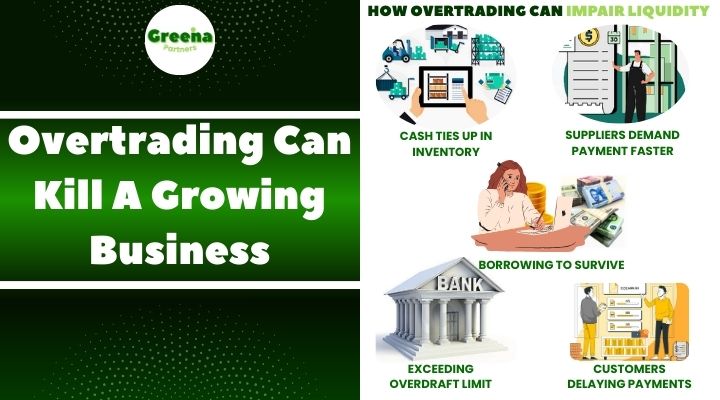
    Overtrading Can Kill A Growing Business

    Overtrading, also known as undercapitalization, occurs when a company is trying to undertake a larger volume of trade or activities than it has financial capacity to do. A company is said to be overtrading when it grows rapidly than its cash flow can support. This can have serious financial repercussion for the business.

    Though, sales are booming; orders are flying in… It sounds good, but your bank account says otherwise. The business operations may be disrupted if your bank refuses to grant credit facilities or your major supplier insists you pay on cash.

    How Overtrading Can Impair Liquidity

    1. Inventory grows faster than cash
    • To satisfy customer demands, you acquire more inventories.
    • The inventory swallows up cash, and until sold and cash is received, liquidity suffers.


    1. Customers delay payments
    • Sales increase, but customers don’t pay on time and as a result, liquidity is trapped.
    • The book says the company is rich (on paper), but in reality, it is broke in the bank.


    1. Suppliers want their payments faster
    • Cash position will suffer if the number of days credit is taken from suppliers is shorter than the days credit is given to customers.
    • The shorter the gap, the more company will be under pressure to settle supplier.


    1. Borrowing to survive
    • Despite increased sales, you may borrow loan to pay salaries, rent, or acquire raw materials.
    • Borrowing increases interest costs, and worsening liquidity position.


    1. Exceeding overdraft facilities limit
    • Sales grows. Need cash to purchase inventory. You constantly exceed overdraft facilities limit agreed with the banks.
    • The business operations may be curtailed, if the bank facility is withdrawn.


    Warning Signs Your Business is Overtrading

    • Creditor payment period getting longer i.e. you are delaying payments to suppliers
    • Rapid growth in turnover, cash is constantly tight
    • Always borrowing to fund daily business activities
    • Struggling to satisfy customer demands or orders efficiently
    • Low liquidity ratio
    • Cash operating cycle is increasing.


    How To Prevent Overtrading

    • Ensure judicious and efficient management of working capital
    • Improve your cash flow projection
    • Avoid over-investment in inventory
    • Negotiate better credit terms with the suppliers
    • Shorten debtors collection period i.e. tighten your credit terms
    • Scale consistent with your working capital capacity
    • Avoid unnecessary debt
    • Seek professional advice.

    In Summary

    Growth is great and sweet. But uncontrolled growth without working capital will lead to liquidity problem. In addition, failure to meet customer demands can lead to strained relationships with customers, vendors, or even employees, eroding the business reputation and impair its ability to take advantage of market conditions.

    Hence, effective and efficient management of the working capital investment is essential to maintaining and ensuring business continuity. Engage financial advisors to develop strategies for managing growth and preventing overtrading.

    NEED EXPERT SUPPORT?

    At Greena Partners, we help businesses like yours grow sustainably- with clear financial systems, robust cash flow planning, and actionable advisory support. Our team can collaborate with you to develop strategies to managing your working capital judiciously.


    Let’s talk.👉 Contact us today to schedule a consultation.

    At Greena, we pride ourselves with highly experienced and committed professionals willing and ready to collaborate with businesses to create value

    SIGN UP below to receive compelling articles to improve your business

  • Working Control vs Controlling Interest Explained

    Working Control vs Controlling Interest Explained

    Working Control Explained

    Working Control vs Controlling Interest: How They Impact Business Structures

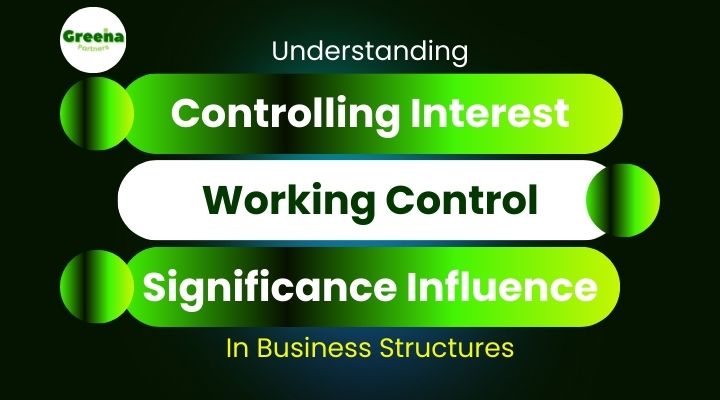
    In accounting, finance, and corporate governance, many are familiar with the concept of controlling interest or significance influence, but not “working control”. Let’s explore each concept deeper with their key differences.


    In corporate finance or business, not all ownership is created equal. Hence, business owners, financial advisors, and investors must understand the levels of influence or control an investor has in a company. These relationships are essential to determining how businesses are run and how investments are reported in the financial statements.

    Working Control

    • Definition: This involves the ability to control the daily business operations or major decisions without having a majority shares. It occurs when a minority shareholder (or shareholders) has enough voting power to influence corporate policy. This usually happens when no single individual shareholder within the company possesses controlling interest.
    • Implication: A shareholder with working control will have practical control through influence (e.g., management structures, board seats, key executive appointments, voting agreements, etc).
    • Ownership Structure: Often between 20% and 50%, depending on the arrangements.
    • For Instance: Tolani owns 45% shares in Ezkoba Limited but controls the board majority and CEO of the company. In this case, Tolani has working control.


    Controlling Interest

    • Definition: This arises when an individual, a corporate, or group, acquires more than 50% voting power in another entity, giving the holder the legal right to control the company’s decisions.
    • Implication: The acquiring entity or individual has full control over financial, operations, and strategic decisions of the other entity.
    • Ownership Structure: Usually more than 50%.
    • For Instance: If a shareholder (Tolani) owns 55% of Ezkoba Ltd, Tolani has controlling interest and can appoint the board and dictate policy direction of the company.


    Significance Influence

    • Definition: This exists when an investor can participate in key financial and operating decisions but not control over them.
    • Implication: Can influence decisions but cannot enforce them.
    • Ownership Structure: 20% or more of voting power
    • For Instance: If Tolani owns 21% of Ezkoba Limited and has a seat on the board, Tolani is said to possess a significance influence.

    Key Difference

    Working Control

    This framework is particularly relevant for professional accountants, investors, business leaders, and decision-makers navigating corporate structures or preparing group financial statements.


    Why It Matters

    Understanding the degree of influence associated with the controlling interest, working control, and significance influence is essential for:

    • Investment Planning
    • Group Structuring
    • Accurate Financial Reporting
    • Tax & Regulatory Compliance

    NEED EXPERT GUIDANCE?

    At Greena Partners, we provide strategic financial management, investment structuring, and compliance advisory for Nigerian businesses. Whether you’re managing subsidiaries, forming partnerships, alliances, or evaluating investment opportunities, our team is available to guide you.

    👉 Contact us today to schedule a consultation.

    At Greena, we pride ourselves with highly experienced and committed professionals willing and ready to collaborate with businesses to create value

    SIGN UP below to receive compelling articles to improve your business

  • Transfer Pricing by Multinational

    Transfer Pricing by Multinational

    Greener Partners

    Multinational Transfer Pricing

    Transfer pricing is the monetary value attached to the goods or services exchanged between divisions or subsidiaries under common control. Whereas the international transfer pricing represents the pricing of goods, services, and intangibles between connected parties in an organization across international boundaries. It is a strategy usually adopted by companies especially multinationals, to redistribute resources between the parent and subsidiaries or affiliates to reduce tax burden.


    Transfer pricing is an essential consideration for multinational entities when conducting transactions between parent and subsidiaries located in different countries. Transfer pricing provides many benefits to companies, particularly those with foreign operations.


    Oftentimes, companies manipulate or falsify records to avoid taxes. In some cases, companies can lower their costs when transacting with connected parties to avoid tariff on goods and services exchanged. The relevant tax authorities are aware of these sharp practices by companies and that is why their records are usually subjected to thorough scrutiny.

    Significance of International Transfer Pricing

    Some importance of international transfer pricing include:


    Tax Optimization

    Generally, transfer pricing affects the distribution of income between countries, and this usually impact the global tax burden of the multinationals. However, complying with the transfer pricing regulations can help companies to minimize the risk of double taxation and optimize tax burden.


    Regulatory Compliance

    To prevent tax base erosion and profit shifting (BEPS), including the need to ensure that transfer pricing is fairly determined to reflect the market price, regulatory authorities around the world and Organisation for Economic Co-operation and Development (OECD) have specific rules and regulations in which multinationals must complied with. Complying with these specific rules and regulations can make companies avoid compliance risk.


    Profit Allocation

    Transfer pricing is used for resource allocation between connected entities involving international transactions. This usually determines the profit attributable to the multinational, and in effect, its financial performance.


    Key Components of International Transfer Pricing

    Basically, the international transfer pricing usually involves:


    Goods

    This represents transfer of physical products between connected parties having a common control i.e., within an organization.


    Services

    This involves managerial, technical, and administrative services exchanged between the parent and its subsidiaries, or affiliates.


    Intercompany Loans and Advances

    This relates to financial arrangements between the parent company and its subsidiaries.


    Intangibles

    These include intellectual property, trademarks, patents, franchise, and brand values exchanged between the parent and its subsidiaries.


    Methods of Transfer Pricing

    Consistent with the dictate of (OECD), the following are major transfer pricing methods, including:


    Comparable Uncontrolled Price (CUP) Method

    This represents one of the most popular transfer pricing methods in the determination of arm’s length prices to be used between connected parties. This method compares the price charged between related parties for goods or services in a comparable uncontrolled transaction. The CUP method is generally used in arm’s length principle where sufficient data is available. It is easy to apply and mostly preferred by many tax authorities.


    Resale Price Method

    Under this method, the transfer price to be used between related parties is the resale price to an independent entity less gross profit margin for the goods purchased from a connected party for resale.


    Cost Plus Method

    Consistent with the arm’s length principle, transfer price is determined by adding an appropriate markup to the total cost incurred on the supply of goods or service in a related party transaction.


    Transactional Net Margin Method

    This involves comparing the net profit margin in a controllable transaction with the net profit margin in comparable uncontrolled transaction. It examines the net profit margin relative to an appropriate base involving assets, sales, and costs, that a taxpayer earns from a controlled transaction.


    Profit Split Method

    This method identifies the combined operating profit or loss to be allocated between related parties in a controlled transaction, by referencing the value contributed by each participant to earn the profit.


    Regulatory Framework

    The Organisation for Economic Co-operation and Development (OECD) provides detailed guidelines on transfer pricing. The guidelines emphasized the need to utilize the principle of arm’s length transaction between connected parties. This principle ensures that transactions between related companies are valued at market prices.

    OECD also provides initiative through BEPS to address the tax avoidance scheme usually adopted by entities to exploit loopholes and mismatches in tax regulations between countries. This ensures that transfer pricing aligns with the value creation system, and that there is transparency in country-by-country reporting (CbCR).

    In addition, local tax authorities have specific rules and regulations that govern transfer pricing. In Nigeria, transfer pricing is regulated by the existing tax laws, including Income Tax (Transfer Pricing) Regulations 2018.


    Challenges and Considerations

    There are plethora of issues facing transfer pricing practices, and some of which include:

    Documentation: Transfer pricing transactions requires detailed documentation to support the judgment and policies adopted, especially during tax audits. These documents are usually subjected to thorough investigation to ensure that the right tax is paid.

    Complexity: Generally, transfer pricing involves multiple jurisdictions with specific rules, regulations, and interpretations. Therefore, the ability to navigate through all these can pose a daunting task.

    Disputes: Oftentimes, transfer pricing can lead to disputes between tax authorities of different jurisdictions, resulting to double taxation or litigation.

    Risk Management: Having the right expertise to develop robust transfer pricing policies to manage compliance, financial, and reputational risks can be challenging.

    Economic Changes: The prevailing market conditions, exchange gyrations, and unstable economic environments can have far-reaching effect on the transfer pricing strategies.


    Best Practices

    The following are some of the transfer pricing best practices that can be adopted by companies:

    Documentation: Companies should maintain up to date and detailed documentation to support transfer pricing policies and practices.

    Review: The transfer pricing policies should be regularly reviewed to reflect the prevailing market conditions and regulatory changes.

    Benchmarking: The transfer pricing policies and decisions should be consistent with the industry standard and that of the comparable companies.

    Professional Expertise: Companies should engage professionals endowed with transfer pricing expertise to help navigate tax intricacies and international regulations.

    Advanced Pricing Agreement: Align or enter into agreement with the relevant tax authorities to obtain certainty on transfer pricing methods to avoid future disputes.


    Ethical Issues in Transfer Pricing

    Transfer pricing often involves ethical issues that bother around abuse and manipulation of records by multinational enterprises (MNEs), and which can negatively impact the economic and social welfare of a country. Some of the key ethical issues include:

    • Tax Avoidance and Evasion
    • Economic Inequality
    • Fairness and Equity
    • Transparency and Accountability
    • Corporate Social Responsibility
    • Legal and Regulatory Challenges


    Tax Avoidance and Evasion

    Companies can manipulate transfer prices to achieve a targeted goal. For instance, multinationals can use transfer pricing to shift profits from countries with high tax rate to jurisdictions with lower tax rate to reduce their overall tax burden. This practice may seem legal, but it deprives countries of their benefits from tax revenue. In addition, when multinationals allocate profits to jurisdictions with favourable tax rates (i.e., tax havens), there will be tax base erosion in the countries where significant economic activities occur, thereby limiting their ability to fund public projects.


    Economic Inequality

    Shifting profits from countries with higher tax rates to tax havens can worsen economic inequality of the countries because resources available to fund social programs, infrastructure, and public services may be inadequate. Also, developing countries who often rely heavily on tax revenues can be disproportionately impacted by aggressive transfer pricing practices, impairing their ability to reduce poverty and develop as a nation.


    Fairness and Equity

    There is huge disparity between SMEs and MNEs, since the SMEs do not have the requisite resources to engage in sophisticated transfer pricing strategies, resulting in an uneven playing ground. Also, local businesses may face higher effective tax rates relative to companies that engage in international transfer pricing, which give undue advantage to MNEs over the local companies.


    Transparency and Accountability

    Companies can intentionally make transfer pricing practices to be opaque and complex in order to make it difficult for relevant tax authorities to understand and scrutinize the financial records of the MNEs. At times, lack of, or inadequate disclosures in financial reporting and intercompany transactions can limit the ability of the tax authorities to hold MNEs accountable for their transfer pricing practices.


    Corporate Social Responsibility (CSR)

    In addition to legal compliance, ethical business practices encompass honesty, fairness, and positive contribution towards to the society. Engaging in aggressive transfer pricing practices can undermine the CSR efforts of MNEs and impair their reputation.


    Legal and Regulatory Challenges

    MNEs usually exploit gaps and mismatches in different tax jurisdictions in relation to transfer pricing. As a result, enforcing compliance may be challenging. Also, ethical issue can occur when MNEs encounter double taxation due to tax disputes between tax authorities of different jurisdictions, resulting in lawsuits and strained international relations.

    In Summary

    International transfer pricing is a challenging but essential aspect of multinational operations. It requires careful consideration, detailed documentation, and strategic planning to maximize tax gains and ensure compliance. Transfer pricing practices are used by the MNEs to deprive home country of their benefit of tax revenue through Base Erosion and Profit Sharing (BEPS). The OECD and local tax authorities have enacted regulations to prevent the abuse and manipulation arising from BEPS and other activities. Complying with these regulations will help companies to minimize double taxation and compliance risks.

    At Greena, we pride ourselves with highly experienced and committed professionals willing and ready to collaborate with businesses to create value

    SIGN UP below to receive compelling articles to improve your business
    info@greenapartners.com

    +234 (0) 901 610 3132
     

    Postal Code: 100213

    74 Ogunnusi Road, Ojodu Ikeja, Lagos

  • Corporate Failure: Meaning | Causes | Symptoms

    Corporate Failure: Meaning | Causes | Symptoms

    Greena Partners

    Corporate Failure: Meaning | Causes | Symptoms

    In the past years, many prominent companies including Arthur Andersen, Bata, Delta Airlines, Dunlop, Enron, Kodak, Marks & Spencer, Nigeria Paper Mills, Nokia, Savannah Bank, Société Générale, etc have all experienced failure. While some failed partially, some experienced corporate disastrous end. Corporate failure is not something palatable, and every worthy organizational leader will strive to avoid it. Any corporate action that may threaten the going concern of a business, erode its corporate image, or result in a dramatic end should be avoided.

    Corporate failure represents the discontinuation of company’s operations occasioned by weak corporate governance, incompetence, and bad investment strategies, leading to inability of the company to earn sufficient inflows to offset operating expenses. It occurs when a company becomes bankrupt and goes out of business. In a business environment, corporate failure is quite common, but only those businesses with working governance system and that are adaptable to market changes, do survive the storm. However, it is noteworthy to mention that most corporate failings are self-induced and internally orchestrated.

    Causes of Corporate Failure

    Corporate failure can be caused by several factors including:

    • Management Incompetence
    • Economic Distress
    • Weak Corporate Governance
    • Technological Innovations
    • Bad Investment Decisions
    • Poor Working Capital Management
    • Poor Infrastructural Facilities
    • Regulatory & Political Environment etc.

    Management Incompetence

    This is a direct consequence of lack of collaboration, experience, managerial skills in relation to strategic thinking and capability. It is occasioned by the inability of the management team or the board to demonstrate the requisite leadership, vision, and expertise to pilot the affairs of the organization. It also implies weak management control over the workings and effective coordination of business activities. When the organizational leadership team is poorly structured, it may result in a situation whereby people or individual within the organization are allotted positions where they are incompetent. Poor leadership team can produce toxic working atmosphere, demotivated workforce, and hence may threatened the going concern of the business.

    A working leadership team recognize their areas of shortfall and quickly respond to fill the gap. They create a conducive working environment that motivate, attract, and enable employees to develop creative and innovative ideas to solve business problems. They also empower their people through relevant trainings in evolving technologies to enable them initiate novel ideas to discover new markets and improve market competitiveness.


    Economic Distress

    Globally, during the period of economic downturn, some businesses may fail and unable to rise again. The decline in the economy may lead to the reduction in the volume of activities, which may adversely affect the performance of many companies. During this turbulent period, companies usually find it difficult to operate at a level that will enable them to maximize returns to offset their financial obligations as they become due.

    Bad economic conditions usually incapacitate and impair the ability of companies to generate increasing revenue. Because it creates a situation that is not within their immediate control and hence, render many companies helpless. You can imagine the level of financial wreckage occasioned by the economic meltdown of 2008 when billion-dollar investments were lost to market crash. The COVID-19 pandemic took everybody by surprise in the year 2020 when the global business was lock down for several months.


    Weak Corporate Governance 

    This is triggered by lack of board effectiveness, unhealthy company culture, inappropriate incentives, board’s risk blindness arising from skills limitations and competence, and the inability to effectively monitor and control senior executives. When the corporate governance system of a company is weak, things will be done anyhow. There will be no proper coordination of affairs of the business, resulting from poor leadership. The internal controls system will be very weak and lack the requisite capacity to adequately check frauds, financial leakages, and other irregularities. Weak corporate governance generally results from the board of directors saddled with oversight responsibilities, but with little or no experience in the core business areas.


    Technological Innovations

    The importance of technology in today’s business cannot be overemphasized. The 21st century businesses require digital transformation to be competitive in the marketplace. Technological tools can be integrated to improve operating efficiency, promote corporate image, and generate increasing revenue. Many aspects of our lives are now interconnected with online activities.

    Therefore, succeeding in digital age required considerable knowledge in evolving technologies including artificial intelligence, machine learning, big data analytics, internet of things etc. However, integrating the requisite technology and keep maintaining the system will require high level of expertise and technically skilled professionals. Hence, if a company fails to leverage on evolving technologies, it may become laggard in the industry and unable to outperform its competitors, and its ability to remain in business may be significantly impaired.


    Bad Investment Decisions

    Company’s previous bad investment decisions that failed to yield the anticipated returns can also result into corporate failure, especially where significant amount is involved. Companies borrowed funds to finance investment opportunities with the expectation that the project will generate sufficient cash flows and superior returns in excess of its cost. If the investment fails, and the company is unable to settle its financial obligations, it may result in dilution of ownership and control. Then the going concern of the company may become threatened.


    Poor Working Capital Management

    Working capital is the difference between current assets and current liabilities. It is the amount required for the day to day running of a business. Whereas working capital management represents the efficient and judicious management of each component of current assets and current liabilities including inventory, account receivable, cash, prepayment, account payable etc. to ensure liquidity of a company. The essence of working capital management is to ensure that sufficient cash flow is available to meet short-term financial obligations (liquidity).

    Cash is regarded as the most liquid asset of any organization. Hence, companies should maintain adequate cash level to meet the day-to-day running of the business. The cost of running out of cash may be damaging to the business including not being able to pay debts as they become due. And if a company consistently fails to pay its bills as they fall due, it can have serious operational repercussions and its ability to operate on a going concern basis may be impaired.

    Therefore, efficient working capital management will guarantee smooth financial operations and help improving earnings and profitability of a company. Excessive investment in working capital should be avoided. Rather, such idle funds should be invested in short-term marketable securities to generate additional returns.


    Poor Infrastructural Facilities

    Poor infrastructure, epileptic power supply, widespread insecurity, lack of good transportation system, etc. usually create additional and increasing costs for companies, especially in developing countries. When the costs become unbearable, companies may decide to close the business or migrate to another country where all these facilities are readily available.


    Regulatory & Political Environment

    Frequent change in regulation including multiple taxation, inadequate access to finance, inconsistent government policies etc. can propel companies, particularly the multinational organizations, to withdraw their investments when the operating business environment become unfavorable. Also, political turmoil, militancy, banditry, insurgency, etc. may threatened the corporate existence of a company. These factors impact on the company negatively beyond the control of its management and hence, the inability to continue business on a going concern basis.

    Symptoms of Corporate Failure

    Corporate failure did not occur overnight. The signs are always there. But it requires the management’s ability to identify and put in place mitigating measures to prevent its occurrence. The following are some of the red flags or symptoms of corporate failure:

    • Low Profitability
    • High Gearing
    • Low Liquidity
    • Declining Sales and Loss of Market Share
    • High employee turnover


    When a company is struggling to pay its debt as they become due, or the financial performance of the organization is on a downward trend year on year, or when profitability ratios such as return on capital employed, profit margin, or return on asset are constantly declining, it is a red flag to corporate failure and action should be taken as immediate as practicable to avoid a corporate catastrophic outcome.

    At Greena Partners, we help businesses develop robust governance system to tighten leakages and improve performance.  We can collaborate with you to design requisite strategies to preclude corporate collapse.

    SIGN UP below to receive compelling articles to improve your business

    info@greenapartners.com

    +234 (0) 901 610 3132
     

    Postal Code: 100213

    74 Ogunnusi Road, Ojodu Ikeja, Lagos

  • Tax Haven: Meaning, Uses, Ethical, and Economic Consequences

    Tax Haven: Meaning, Uses, Ethical, and Economic Consequences

    Greener Partners

    Tax Haven: Meaning, Uses, Ethical & Economic Consequences

    Tax havens are mainly used by multinational enterprises (MNEs) and high net worth individuals, including politicians, as a special purpose vehicle to minimize the overall tax liabilities and shield their assets from public scrutiny. Tax haven practices may be legal, but it creates opportunities for foreign investors and wealthy individuals to manipulate the system to benefit beyond tax avoidance and tax evasion.


    What Is Tax Haven?

    This is a jurisdiction or country that offers foreign entities or individuals with minimal or no tax liability. Tax haven provides favourable tax laws and regulations to attract businesses and individuals seeking to minimise their tax burdens and protect their assets. Some of these foreign investors and individuals use tax haven to facilitate money laundering, thereby violating the laws of their home country. This makes it highly inimical to the global financial system and impair the ability of the home country to fund public infrastructure.

    Characteristics of Tax Havens

    Some of the features include:


    Low or No Taxes:

    Tax haven offers low or no taxes on the company income, capital gains, inheritance, and other financial transactions to attract MNEs and individuals seeking to reduce their tax burdens.


    Secrecy and Confidentiality

    Businesses done in tax haven countries are shrouded in secrecy to protect the privacy of the financial information. Usually, there are strict confidentiality laws in place to protect and ensure non-disclosure of the identities of the companies’ owners, and their bank accounts. Thereby making it difficult for foreign tax authorities to obtain relevant information.


    Ease of Business Formation

    Tax haven ensures that the formation and registration of businesses, associations, trusts, and other legal entities is seamless. This minimal statutory requirements and administrative costs, facilitate ease of business formation.


    Political and Economic Stability

    Tax haven jurisdictions often provide a politically and economically stable environment to foreign investors to ensure businesses and their assets are safe from political upheaval and confiscation. This usually serves as a side attraction to foreign investments.


    Lack of Transparency

    There is usually lack of financial transparency in tax havens since they do not participate in international information exchange agreements and no detailed financial reporting is required.


    Advanced Financial Infrastructure

    Tax haven countries have sophisticated financial system with a robust banking sector, legal frameworks, and sound professional services, including tax, accounting, and legal expertise tailored to assist foreign investors.


    Common Tax Haven Countries

    The list of countries involving in tax haven practices are numerous. Below are some of them:


    Africa
    • Mauritius
    • Mozambique
    • Seychelles


    Asia Pacific
    • Hong Kong
    • Singapore
    • United Arab Emirates


    Caribbean and Central America
    • Bahamas
    • Bermuda
    • British Virgin Islands
    • Cayman Islands


    Europe
    • Cyprus
    • Luxembourg
    • Malta
    • Switzerland


    Uses of Tax Havens

    Tax havens are use for several purposes by MNEs and wealthy individuals, including:


    Tax Avoidance

    Companies and individuals use tax havens to minimize their tax burden through base erosion and profit shifting.


    Assets Protection

    Tax havens are used by wealthy individuals and companies to protect their assets against economic upheaval, political instability, and expropriation from home country.


    Confidentiality

    Tax haven jurisdictions have strict confidentiality laws in place to protect and ensure non-disclosure of the identities of the investors, including their bank accounts details. This protects the investors from scrutiny by the home country.


    Portfolio Diversification

    MNEs and wealthy individuals use tax havens as special purpose vehicle to diversify their investments to take advantage of favourable regulatory environments.


    Ethical and Economic Implications of Tax Havens

    Some of the key ethical and economic consequences in tax havens include:

    1. Revenue Loss
    2. Economic Inequality
    3. Fair Competition
    4. Transparency and Accountability


    Revenue Loss

    The use of tax havens contribute significantly to revenue losses for high-tax countries through tax base erosion and profit shifting. This has impaired the ability of the home country to finance public infrastructure.


    Economic Inequality

    Shifting profits from countries with higher tax rates to tax havens can aggravate economic inequality of the home country. MNEs and high net worth individuals benefit disproportionately from tax avoidance strategies, while the ordinary taxpayers suffer the larger tax burden.


    Fair Competition

    The use of tax havens by MNEs provide undue advantage to them over the local businesses that cannot exploit the opportunities offer by tax havens. This potentially undermines fair competition and distort the markets.


    Transparency and Accountability

    The global financial integrity is at risk due to lack of transparency in tax havens. The tax haven practices is shrouded in secrecy and serve as a special purpose vehicle to facilitate illicit activities, including tax evasion, money laundering, etc., by the MNEs and wealthy individuals. The non-disclosure of financial information, generally incapacitate the tax authorities to hold MNEs accountable for their tax haven activities.


    Global Efforts to Address Tax Havens


    Organization for Economic Co-operation and Development (OECD) Initiatives

    To improve transparency and combat tax avoidance, the OECD has launched several initiatives, including Base Erosion and Profit Shifting (BEPS) project and the Global Forum on Transparency and Exchange of Information for Tax Purposes.


    Automatic Exchange of Information (AEOI)

    As provided under the OECD’s common reporting standard (CRS), member countries agree to automatically exchange financial information to limit the ability of wealthy individuals and MNEs to hide assets in offshore accounts.


    Country-by-Country Reporting (CbCR)

    Under the OECD Initiatives, MNEs are required to present their financial reporting information on a country-by-country basis. This provides tax authorities with a better understanding of MNEs’ global operations and profit allocation.


    Blacklisting and Sanctions

    International organizations, including some other countries, compile the list of non-cooperative countries or jurisdictions with the aims of imposing sanctions and thoroughly scrutinize their financial transactions.


    Some Nigerian Elites Previously Connected With Tax Havens

    Recent investigations on offshore entities by Panama papers of 2016 revealed some notable Nigerians, including David Mark, Bukola Saraki, Wale Tinubu, Dangote, TY Danjuma, Hakeem Bello-Osagie, Mike Adenuga, James Ibori, Andy Uba, etc., in the Panama leak. In addition, in 2021, Peter Obi,  Stella Oduah, Mohammed Bello-Koko, and others, were fingered in the Pandora papers in relation to tax havens.

    In Summary

    Though, tax havens play a significant role in the international financial system, but businesses and elites often use it to facilitate financial transactions from high-tax jurisdictions to low-tax environments. The financial secrecy and protection serve as a side attraction to the MNEs and high net worth individuals. Tax havens may provide advantages of legitimate tax planning and asset protections, they portend a significant ethical and economic concerns to high-tax jurisdictions. Revenue losses, increased economic inequality, unfair competition, financial secrecy, opaque transactions, etc., are part of the underlying challenges of tax havens.


    Combating and addressing these issues require concerted efforts by the international organizations and other relevant stakeholders, especially the G20 nations to enhance transparency, promote fair competition, and ensure compliance with regulations.


    Pressures are mounting on the tax haven jurisdictions to comply with the OECD initiatives. The Exchange of Information Agreement (EOI) among participating members is required to limit the competitive advantage enjoyed by the MNEs. This will remove the veil over the identity of offshore companies and their banking information.

    At Greena, we pride ourselves with highly experienced and committed professionals willing and ready to collaborate with businesses to create value

    SIGN UP below to receive compelling articles to improve your business

    info@greenapartners.com

    +234 (0) 901 610 3132
     

    Postal Code: 100213

    74 Ogunnusi Road, Ojodu Ikeja, Lagos

  • Financial Statement Fraud

    Financial Statement Fraud

    Greena Partners

    Financial Statement Fraud

    Financial statement fraud occurs when a company intentionally manipulates financial information to deceive or mislead shareholders, investors, lenders, and other users of the general purpose financial statements.

    Aggressive accounting, that is, choices that are designed by management to enhance a company’s financial performance and position, by inflating revenue, earnings, and other reported operating cash flows, or by decreasing the amount of expenses or debts in a reporting period, can threatened the going concern of a business if not nip in the bud.

    This kind of fraud can have severe consequences for organizations, leading to damaged reputation, financial losses, and even legal repercussions. Understanding common methods of financial statement fraud, as well as implementing effective detection and prevention measures, is crucial for maintaining the integrity of financial reporting.

    There are several methods usually employed by companies to commit financial statement fraud. Some of which are set out below:

    1. Revenue Manipulation
    2. Overstating/ Understating Expenses
    3. Improper Asset Valuation
    4. Concealing Liabilities
    5. Fraudulent Disclosures
    6. Round-Tripping
    7. Related Party Transactions
    8. Timing Differences
    9. Manipulating Reserves and Accruals
    10. Corruption

    Revenue Manipulation

    Companies undertake several methods of perpetrating revenue fraud. Revenue can be artificially inflated by recording sales that have not been earned or recognising revenue prematurely. A fictitious trade receivable can be manufactured to create artificial sales. At times, companies inflate trade receivables in order to increase revenue. In addition, companies can record fictitious sales, or record revenue when risk and reward incident to the goods or services have not been transferred to the customers.


    Overstating/ Understating Expenses

    Expenses can be manipulated to achieve a predetermined objective. Management can increase expenses arbitrarily in order to reduce the company’s tax liabilities. For example, directors’ remuneration, marketing expenses, etc., can be inflated to achieve a lower profit, and in effect, resulting in a lower tax been paid. On the flip side, management can intentionally understate expenses by undercharging depreciation or any other specific expense line items to achieve high profit margin to mislead investors. Other methods include to defer legitimate expense to the next reporting period, capitalizing expenses, etc., all in a bid to increase reported profit.

    Generally, companies engage in creative or gymnastic accounting practices by cooking or making their books appear so rosy than necessary to deceive investors. Though, the tax authorities are aware of these sharp practices, and that is why a company’s audited financial statements is being subjected to thorough scrutiny during tax audit.


    Improper Asset Valuation

    The valuation of assets in the statement of financial position can be materially manipulated to achieve intended results. Assets such as properties, plant, and equipment, goodwill, including inventories can be overvalued to misrepresent the company’s  financial position. For instance, when inventories are overvalued, the reported profit will be lower, and in effect, a lower tax liability will be paid. Misleading asset valuation can also arise when a company intentionally fails to write down impaired assets to their recoverable amount in consonant with the dictate of IAS 36 on impairment of assets.


    Concealing Liabilities

    Companies can omit or understate liabilities in order to present a healthier financial position in a particular period than they actually have. Concealing liabilities can arise when an entity’s management fail to disclose off-balance sheet items including operating leases or contingent liabilities. It can also occur when account payables are understated, or improper recording of warranty costs and loan covenants are carried out in the books.

    At times, companies’ management can use “big bath” technique to manage their earnings by conducting a one-time write-offs in a reporting period to enhance future profit. Big bath is an unethical behaviour usually carried out by a company’s top level management when they realised that they cannot achieve the minimum earnings target in a given period. The management can then delay revenue realization, create big write-offs, or making prepay expenses in order to get big bonuses in the near future.


    Fraudulent Disclosures

    The information provided in the financial statements must be accurate, faithfully represented, and devoid of any ambiguity to enable users make informed business and investing decisions. Fraudulent disclosures involves intentional manipulation of facts by providing misleading or false information in the financial statements. Companies can omit material information, making overly optimistic estimates, or misrepresenting the nature of transactions or financial arrangements with third parties. To achieve an intended result or objective, information relating to contingent liabilities, related party transactions, accounting changes, or any material events, can either be obscured or omitted entirely in the financial disclosures or footnotes.


    Round-Tripping

    This is a fraudulent activities usually conducted between related entities where money is exchanged to create the appearance of a legitimate business transaction, where in reality, it is fake. This fraudulent act is usually perpetrated by the management to artificially inflate revenue, create fictitious transactions, or manipulate the financial information to mislead shareholders, investors, government, and other users of the financial statements. Generally, engaging in round-tripping can result in lawsuits, impair a company’s relationships with relevant stakeholders, and significantly damage its reputation once uncovered.


    Related Party Transactions

    Though, not necessarily a mechanism for fraud, but companies, including multinational entities, can use related party such as subsidiaries, affiliates, or their executives to perpetrate financial fraud. This is particularly possible when assets, goods, or services are exchanged between related parties at inflated prices. Contract prices, loan agreement, leases, and service agreement  between related entities can be manipulated to distort financial results. Because of potential conflict of interest, auditors, or regulatory authorities usually subject related party transaction to thorough investigation.


    Timing Differences

    This involves recording revenue or expenses inappropriately in different periods. Revenue or expenses can be shifted from one period to another in order to achieve a targeted or predetermined earnings. For example, if a company wants to report high profit in a particular period, it can delay closing of books to enable more sales to be generated or allow customers’ invoices to be paid before the books are finally closed for the reporting period or month.


    Manipulating Reserves and Accruals

    Companies can manipulate reserves and accruals, including warranty reserves, provision for doubtful debts to smooth earnings or create the appearance of financial stability.


    Corruption

    This involves conflict of interest, bribery, kickbacks, contract inflation, selling of proprietary information, economic extortion, money laundering, etc., often perpetrated by company’s management or its official in collusion with third parties.

    In Summary

    Financial statement fraud is usually carried out among company directors, employees, and sometimes require collusion with external parties, including auditors, consultants, or vendors. Hence, detection of this kind of fraud will require careful analysis of the financial statements using relevant tools to identify unusual or inconsistent patterns in transactions. Independent verification of key financial metrics may be carried out to spot irregularities.

    Engaging in financial statement fraud have dire consequences for organizations. It can result in financial losses, lawsuits, or erode the company’s reputation. Consider the scandals, and disastrous end of Enron, WorldCom, Wirecard, etc. Understanding ways by which financial statement fraud are been committed, including putting in place, effective detection, and prevention measures, can protect the integrity of financial information and enhance investors’ confidence.

    At Greena, we pride ourselves with highly experienced and committed professionals willing and ready to collaborate with businesses to create value

    SIGN UP below to receive compelling articles to improve your business
    info@greenapartners.com

    +234 (0) 901 610 3132
     

    Postal Code: 100213

    74 Ogunnusi Road, Ojodu Ikeja, Lagos

  • Key Factors That Influence Share Prices

    Key Factors That Influence Share Prices

    Key Factors That Influence Share Prices

    Key Factors That Influence Share Prices

    Share price represents the economic worth of a company’s shares. It is the amount at which a company unit share can be traded in an organized financial market. These share prices are determined by several internal and external economic factors, including market conditions. Though, investing in shares can be a very profitable venture but need critical evaluation to avoid the risk of financial losses. The stock market is highly volatile and can make the share prices susceptible to market gyrations. This is because a single misstep can result in disastrous financial outcome for an investor.


    Outlined below are some of the factors that influence share prices:

    Company Fundamentals (Financials)

    The performance of a company in terms of top-line and bottom-line growth, profit margins, earnings before interest, tax, depreciation, and amortization (EBITDA), earnings per share (EPS), dividends, and overall financial wellbeing can have material effect on the determination of a company’s share price. The fundamentals have the capacity to influence investors’ sentiment positively or negatively in relation to a company’s share prices. A rational investor will seek to maximize returns where possible. Therefore, a company with a weak financial performance will not be able to attract investors, leading to a fall in its share prices. Generally, rational investors have propensity to acquire shares in a company with exceptional performance. This will increase demand for a company’s shares, leading to an increase in its share prices.


    Demand and Supply

    The demand and supply dynamics can significantly influence the share prices of a company. When there is high demand for a company’s shares arising from strong financial performance, positive news about the company, favourable industry trends, or perceived stock underpricing, the share prices will tend to increase. However, when the number of shares available for sale in the market is more than the unit of shares demanded by investors, the share prices will drop. Generally, the events such as insider selling, share buybacks, stock issues, initial public offering, or secondary offerings can put pressure on a company’s share prices.


    Industry Performance

    The performance of the industry where a company operates can affect its share price. A rapidly growing industry can attract positive sentiment from investors group, which can significantly enhance a company’s share prices. A sector with a bad reputation cannot command any positive influence from the market. Hence, the share prices of the companies operating in such sector may not be attractive.


    Market Sentiment

    The overall attitude, mood, or psychology of investors about a company’s shares can affect its share prices. Factors such as market speculation, rumours, investor perceptions, etc. can significantly influence a company’s share prices. Specifically, when the market sentiment is bullish, the share prices rise, whereas a bearish market sentiment indicates a declining share prices.


    Economic Factors

    The macroeconomic indicators of a country, including GDP growth, interest rates, inflation rates, unemployment, etc. can have material effect on the companies’ share prices. Strong economic indicators can enhance investor confidence, leading to increased share prices. In addition, a stable economy has the tendency to attract foreign direct investments, leading to high demand for companies’ shares, and hence increase in share prices. Whereas a country with a troubled economy will discourage foreign direct investment investments, and the existing investors may sell-off their shares, resulting in a fall in share prices.


    Monetary Policy

    The central bank decisions or actions about interest rates can affect countrywide economic activity, borrowing costs, consumer spending, purchasing powers, etc. This  can materially influence the share prices. If the policies announced by the central bank is favourable to investors, the market sentiment will be positive, and share prices will tend to increase. But unfavourable policies can erode investor confidence, which may prompt sell-off, and in effect, declining share prices.


    Regulatory Changes

    Changes in government policies or regulations can affect a particular industry or industries, leading to a change in companies’ share prices. For instance, an increase in companies’ income tax rates can affect all companies operating within an economy, which may lower earnings, and in effect, the share prices. Contrarily, if government decides to reduce companies tax rates, earnings will increase, which will boost the share prices.


    Geopolitical Risks and Global Events

    Investors will always avoid any country with a turbulent political environment to minimize financial risk. The events such as war, natural disasters, geopolitical tensions, or global economic crises can create uncertainty in the financial markets leading to gyration in share prices.

    In Summary

    Generally, share prices are determined by the market forces of demand and supply. This is because when demand for a company’s shares exceeds supply, the share prices increase because investors are willing to pay higher prices to buy shares. On the other hand, when supply of shares exceeds demand, the share prices tend to decline as the sellers compete to find willing buyers at lower prices. It is essential to note that these factors are interrelated in the determination of share prices.

    In addition, the investor sentiment and perceptions, particularly the dynamics of demand and supply can significantly influence share prices based on the fundamental factors.

    Therefore, before making your next investing decision, it is judicious to consider these factors to have better understanding of how the stock market operates. Developing investment strategy can also help you to identify new opportunities and potentially profit from share price movement, especially if the shares are undervalued.

    Here, are some factors to consider before investing in shares

    If you need financial advice, kindly reach out to us at Greena Partners. Our advisory team are available to collaborate with you to provide a unique and requisite support towards making your smart investing decision.

    At Greena, we pride ourselves with highly experienced and committed professionals willing and ready to collaborate with businesses to create value

    SIGN UP below to receive compelling articles to improve your business

    info@greenapartners.com

    +234 (0) 901 610 3132
     

    Postal Code: 100213

    74 Ogunnusi Road, Ojodu Ikeja, Lagos

  • Recapitalization: Upside | Downside

    Recapitalization: Upside | Downside

    Greena Partners

    Recapitalization: Upside | Downside

    On March 28, 2024, the Central Bank of Nigeria (CBN) rolled out a circular on the review of minimum capital requirements for commercial, merchant, and non-interest banks. To satisfy the minimum requirements, banks are provided with several options, including:

    1. Introducing additional capital through right issues, private placement, and/ or offer for subscription
    2. Engaging in business combinations through merger and acquisition (M&A)
    3. Upgrade or downgrade license authorization/ category.

    Minimum Capital Requirement

    The new minimum capital requirements of banks as unveiled by the CBN are shown in the table below:

    Minimum Capital Requirement

    Time Frame

    All the banks are given two (2) years to comply with the recapitalization exercise, effective April 01, 2024, and ending March 31, 2026.

    Specifically, the apex bank requires that the new minimum capital must be raised through paid-up capital and share premium only for existing banks, and paid-up capital only for proposed or new banks.

    In addition, all banks are required to submit to the Director, Banking Supervision Department of CBN, not later than April 30, 2024, of their implementation plans on the chosen option (s), and how they intend to meet up with the requirement, including their specific timelines.

    Implications

    Bank recapitalization involves the process of enhancing the capital structure of a bank by introducing additional capital. This usually has some upside and downside effects. Thus, outlined below are some of the possible implications of the recapitalization exercise include, but not limited to:


    Upsides of Recapitalization:

    Close monitoring and Supervision:

    Recapitalization ensures there is proper scrutiny and supervision over banks’ activities by the regulatory authorities. This will enable the banks to meet up with the capital adequacy requirements imposed by the CBN.


    Enhanced Capital Base:

    Recapitalization will birth bigger, stronger, and healthier banks which ensure financial stability. This can boost the capacity of banks to absorb losses and maintain going concerns even during economic upheaval.


    Improved investors’ confidence:

    When there is recapitalization investors and depositors will have more confidence in the banks’ stability and solvency. This can lower the level of withdrawals by depositors and reduce funding costs for the banks.


    Additional Capital Inflows:

    When there is recapitalization, foreign investments will be attracted into the economy, which may enhance the Nigerian currency (naira).


    Improved Lending Capacity:

    With increased capital, banks are more equipped to lend to businesses, especially the real sector of the economy e.g., agriculture, manufacturing, retails, etc. This can stimulate investment and improve economic growth.


    Economic Growth:

    Recapitalization will ensure banks are more positioned to support the Federal Government intended goal to achieve $1 trillion economy by the year 2030.


    Resilience:

    Banks will become more resilient to global, market, and economic challenges/ headwinds.


    Enhanced Owners’ Equity Value:

    Recapitalization can result in merger or acquisition of some banks. A successful M&A scheme can create additional value to the shareholders through synergy.


    Downsides of Recapitalization:

    Loss of Identity:

    Some banks may collapse or lose identity to another bank through acquisition.


    Job losses:

    Recapitalization can result in acquisition of one bank by another. When this happens, the acquiring bank may shutdown the underperforming segments, which may result in job losses.


    Issue Costs:

    Costs associated with underwriting and raising additional equity capital, including regulatory fee, professional fees, marketing expenses, etc. will be incurred. This may portend additional financial burden on the banks.


    Dilution of Ownership:

    The proportional ownership of the existing shareholders may be impaired when issuing new shares due to the recapitalization. This will lead to reduced dividend per share, and in effect, discontent the shareholders. As a result, there may be shareholder activism, management change, etc.


    Management Concerns:

    The implementation of recapitalization exercise is a tedious, time-consuming, and complex activities. Considerable management efforts are required to ensure proper coordination with investors, regulators, and other relevant stakeholders. This may distract management from the smooth running of the day to day business activities.


    The successful implementation of the recapitalization plan will depend largely on some prevailing factors, including the market conditions, regulatory environment, and the peculiarity of the individual bank. Though, the potential benefits of recapitalization may outweigh its costs, the challenges that ensue will need to be judiciously managed to ensure its sustainability.

    Task Ahead

    Consistent with the new minimum capital requirements, all the relevant stakeholders, including the banks, regulatory agencies, etc. will be fully occupied for the task ahead. During this period,

    • All the relevant regulatory agencies, including the CBN, SEC, NDIC, etc. will be engrossed with their oversight functions to ensure successful implementation.
    • Banks may want to raise additional capital through right issues, private placement, or offer for subscription.
    • Any bank that cannot meet up with the capital requirements may be acquired by, or combined with, another bank, or cease operation.
    • Professionals such as accountants, lawyers, brokers, etc. would be engaged to provide the requisite supports and guidance.

    Investing in Shares- Look Before You Leap

    In the coming days, the banks will be out to raise additional capital from the public to meet up with the minimum capital requirements. Consequently, as a prospective investor, it is essential that you look before you leap.

    Shares acquisition can be a very lucrative opportunity because it will confer on you the ownership status in a company. As a result, you will reap the benefit of your investment whenever the company distributes dividend.


    However, before committing your financial resources into buying shares, consider your financial goals and risk appetite. This is because it is not certain that the anticipated return will be achieved. Economic conditions and external factors can impair or erode your investment. Therefore, caution should be exercised. Don’t buy shares of a company because of sentiment or emotion. More importantly, before committing your hard-earned financial resources:

    • Carry out due diligence (financial, legal, operational, etc.)
    • Critically evaluate the investment proposal to ascertain its viability
    • Seek professional advice from qualified financial advisor endowed with requisite technical know-how.


    These are essential ingredients to avoiding a catastrophic financial outcome.

    Here, are some factors to consider before investing in shares of a bank or any other company.

    If you need financial advice, kindly reach out to us at Greena Partners. Our advisory team are available to collaborate with you to provide a unique and requisite support towards making your smart investing decision.

    At Greena, we pride ourselves with highly experienced and committed professionals willing and ready to collaborate with businesses to create value

    SIGN UP below to receive compelling articles to improve your business

    info@greenapartners.com

    +234 (0) 901 610 3132
     

    Postal Code: 100213

    74 Ogunnusi Road, Ojodu Ikeja, Lagos

  • Factors To Consider Before Investing in Shares

    Factors To Consider Before Investing in Shares

    Factors To Consider Before Investing in Shares

    Factors To Consider Before Investing in Shares

    Investment in shares can be a worthwhile opportunity but requires critical evaluation and due diligence before committing one’s hard-earned financial resources into any investment proposal. This is necessary to avoid the risk of financial losses. Though, economic conditions, including recession, war, inflation, pandemic, etc. can erode the entire original investment or part thereof, but financial due diligence and sound professional advice can assist a rational investor in evaluating the available courses of action before final decision is taken.

    Set out below, are key considerations for investing in shares, including:

    1. Financial Goals
    2. Capital Investment
    3. Risk Tolerance
    4. Company Fundamentals
    5. Dividend Payment History
    6. Diversification
    7. Market & Economic Conditions
    8. Regulatory Environment
    9. Valuation
    10. Liquidity

    Financial Goals

    A prospective investor must decide on the financial goals to be achieved before investing. This is because investing decision should align with the short-term, medium-term, or long-term intended financial objectives. These goals should be specific, measurable, purpose-driven, unambiguous, and time bound. For example, your goal may be to buy a home, car, fund your children’s education, or earn stream of income at retirement. Generally, investors aim to maximize return on investment. Hence, the financial objectives should be consistent with your risk appetite.


    Capital Investment

    The amount of capital outlay available for investment will determine the size of the portfolio. Some categories of investment require a minimum amount while others a huge capital outlay. However, the higher the size, all things being equal, the higher the expected returns and vice versa. In addition, investment in shares will attract some incidental expenses such as professional fee, commissions, etc. Most importantly, you should:

    • Identify and compare brokerage fees, commissions, account maintenance fees, bank charges, professional fee, and other costs associated with buying, keeping, and selling shares.
    • Consider the implications of tax and inflation as it relates to shares acquisition and disposal.


    Risk Tolerance

    This represents the level of risk that one is willing and ready to undertake. Risk involves the possibility of losing the original investment or part thereof, due to the prevailing economic or market conditions. Generally, investing in shares is susceptible to market gyrations (fluctuations), which may negatively impact the value of your investment. It is a chance that financial losses may arise from the investment. That is why it is essential to incorporate the element of risk in the cash flow estimates when evaluating the investment proposal.

    Imagine the financial outcome of some investors in 2008 during the economic meltdown. You should learn from other investors’ past mistakes. Shares are considered the riskiest asset. Hence, before investing in shares/ stocks:

    • Assess your risk appetite in relation to the volatility of the securities.
    • Consider your age, investment experience, financial condition, and the ability to withstand any unfavourable outcome.
    • Consider your financial exposure to maximize return.
    • Integrate risk management strategies, including hedging techniques, position sizing, etc. to minimise potential losses and protect your capital investment.


    Company Fundamentals

    If you have some targeted companies you want to buy their shares, consider analysing their audited financial statements, including income statements, statement of financial positions, and cash flow statements to assess their prevailing financial condition. Their management commentaries and additional disclosures may also help to gain some insight into the business critical activities. Before investing in shares:

    • Carry out financial analysis to evaluate some key metrics, including revenue, gross profit margin, operating profit, EBITDA (earnings before interest, tax, depreciation, and amortization), net profit margin, return on equity, dividend capacity, and debt to equity.
    • Consider researching the companies’ management team, competitive position, product offerings, corporate governance, brand awareness and recognition, and market shares.


    Dividend Payment History

    The historical patterns of dividend payment provide important information about future company performance and investment returns. A company that rarely pays dividend may not likely satisfy the financial goal of an investor that desires a regular income. Therefore, before investing in shares:

    • Assess the company’s past dividend patterns, including dividend yield, and payout ratio.
    • Assess the capacity of the company to pay dividend on a consistent basis through earnings, free cash flow, and future growth prospects. Because strong financial performance is a function of future dividend payment.
    • Consider inflation and tax implications on the dividend income, and this should be consistent with your overall investment strategy.


    Diversification

    This is a risk management technique that mixes a wide variety of investments within a portfolio. It is an investment strategy designed to reduce exposure to risk by combining  several investments, including shares, bonds, real estate, etc. which are unlikely to all react to market conditions in the same way. As a result, volatility will be limited, since not all the asset classes, or industries will fluctuate in value at the same time. Usually, the essence of diversification is to minimize a potential risk to avoid a disastrous financial end.

    Instead of committing your limited scarce financial resources entirely on stocks:

    • Consider a mix of investments across asset classes, including shares, bonds, commodities, real estate, etc., as well as investing in different industries and geographical regions. This will make your investment portfolio more resilient to gyrations in the financial markets.
    • Avoid over-investing in a single stock or industry to mitigate the risk of significant financial losses.
    • Maintain a well-diversified investments. This will help you to achieve a more consistent returns over time.
    • Rebalance your portfolio regularly to maintain diversification, and consistent with the prevailing market conditions.


    Market & Economic Conditions

    These have material effect on the value of an investment. Hence, it is important for a potential investor to be conversant with the dictate of the market and economic trends. Before investing in shares:

    • Understand the prevailing economic metrics, interest rate changes, inflation expectations, including geopolitical tendencies that could affect stock market performance.
    • Monitor the market and macroeconomic indicators, central bank policy statements, geopolitical developments, and global events that could influence market sentiment and investor confidence.
    • Consider the current stage of the economic cycle, and how it could impact different industries and asset classes.
    • Be flexible and adaptable to changing market conditions consistent with your investment strategy.


    Regulatory Environment

    The legal and regulatory environment can impact the value of an investment. When investing in shares:

    • Understand the rules and regulations that affect investment practices, securities trading, and the stock market in general.
    • Avoid compliance risks arising from tax laws, statutory reporting requirements, and disclosures.
    • Be conversant with regulatory changes that could impact investment opportunities and market liquidity.


    Valuation

    This is the process of determining the economic worth of a company’s shares. Before investing in shares:

    • Carry out fundamental analysis to determine the intrinsic value of the company’s shares relative to the current market price.
    • Consider estimating valuation multiples, including price earnings ratio, dividend yield, and price to book value ratio to ascertain whether the company’s shares are underpriced, overpriced, or properly priced.
    • Other non-monetary factors, such as intellectual property, proprietary technology, brand awareness, corporate governance, business model, and growth potential should be taken into consideration when carrying out the valuation.


    Liquidity

    The shares should readily be sold and marketable at a price close to the quoted market price. Therefore, ensure your targeted company’s shares can be easily converted to cash when the need arises.

    In summary

    By exercising caution, asking pertinent questions from professionals, conducting thorough research and due diligence, you can be equipped to building a well-diversified investment portfolio. Though, economic uncertainties and external factors may pose challenges, effective risk management and strategic planning can help navigate market volatility to achieve long-term viable investment.


    Consequently, consulting with a qualified financial advisor is essential to avoid a catastrophic financial outcome. At Greena Partners, our advisory team can collaborate with you to provide a unique and requisite support towards making your smart investing decision.

    At Greena, we pride ourselves with highly experienced and committed professionals willing and ready to collaborate with businesses to create value

    SIGN UP below to receive compelling articles to improve your business

    info@greenapartners.com

    +234 (0) 901 610 3132
     

    Postal Code: 100213

    74 Ogunnusi Road, Ojodu Ikeja, Lagos

  • Factors That Influence Exchange Rates

    Factors That Influence Exchange Rates

    Exchange Rates

    Factors That Influence Exchange Rates

    Generally, exchange rate represents the amount at which one currency can be exchanged for another currency. It is mostly determined by the market forces of demand and supply and can be influenced by market sentiment and economic factors. This is because, when there is high demand for a currency, such currency tends to appreciate against the other currency. On the flip side, if there is an increase in supply of a particular currency, the currency will depreciate because supply is more than demand. The following are some of the factors that influence exchange rates between two countries:

    • Current Account Balances
    • Price Level Changes
    • Interest Rates
    • Economic Performance
    • Public Debt
    • Market Sentiment and Speculation

    Current Account Balances

    This represents the receipts and payments of export and import activities between a country and other countries of the world, involving transactions relating to goods, services, dividend, and interest. When a country has current account surplus, it indicates receipt from export transactions is more than its payment for import, and in effect, its currency appreciates. But when a country’s import economic activities outweigh its export, this results in current account deficit. The excess demand for foreign currency will lead to the depreciation of the domestic currency.


    Price Level Changes

    Inflation is the general increase in the prices of goods and service leading to a fall in the purchasing power of money. When there is inflation, the value of money (the amount of goods or services that money can buy) will decline. Therefore, a country with a higher inflation rate relative to its counterparty will experience currency depreciation. A country currency will appreciate if its inflation rate is lower as compared with the inflation rate of the oversea trading partners. For this purpose, a country inflation rate is inversely related to its exchange rate.


    Interest Rates

    Interest rate is the compensation required by the suppliers of debt capital. It represents the rate of return to the bondholders on their investments. A country with a higher interest rate has the propensity to attract capital inflows (i.e., foreign investment) into the economy and increase the demand for the domestic currency. This, will in turn, lead to the currency appreciation. Usually, foreign investors will commit their limited scarce financial resources in a country where they can earn a higher return on their investments. However, it should be noted that positive correlation exists between interest rate and exchange rate. This means that if a country’s interest rate increases, its currency will appreciate, and if a country lowers its interest rate, its exchange rate decreases.


    Economic Performance

    A country with a strong economic performance arising from stable fiscal policies, low unemployment rates, and high GDP growth will experience increase in demand for its currency. These strong economic indicators have the tendency to enhance exchange rate of the country. Whereas a country with unstable or high political and economic risks will find it difficult to attract foreign investments.


    Public Debt

    This represents the total debt obligations owed by a country to its creditors. A country with a high level of sovereign debt consistent with its GDP, will find it difficult to attract foreign investment, leading to its currency depreciation. Whereas a country with a lower debt to GDP ratio can attract capital inflows, leading an increasing exchange rate.


    Market Sentiment and Speculation

    The investors’ or market participants’ perceptions about a country political and economic conditions can make exchange rate susceptible to market gyration in the short-term. Traders can speculate and adjust their positions to observe market reaction.

    In summary, a decrease in exchange rate will impair the purchasing power of money, which will make a domestic currency unattractive to foreign investment. The exchange rate movements can be difficult to predict with some degree of certainty due to complex underlying factors. Essentially, rational investors should have minimum knowledge and understanding of the foreign exchange market in the determination of a currency value, and the rate of return on their investments.

    At Greena, we pride ourselves with highly experienced and committed professionals willing and ready to collaborate with businesses to create value

    SIGN UP below to receive compelling articles to improve your business

    info@greenapartners.com

    +234 (0) 901 610 3132
     

    Postal Code: 100213

    74 Ogunnusi Road, Ojodu Ikeja, Lagos

  • Stakeholders Engagement

    Stakeholders Engagement

    Stakeholders Engagement

    Stakeholders Engagement: Meaning & Importance

    The principal goal of every profit-making organization is to enhance the shareholders’ value i.e., increase the wealth of the owners. This goal may suffer significantly, if the company is unable to increase the value of the business. The company may not be able to create value for the business if the operating environment is turbulent and hostile.

    Therefore, to achieve a beneficial outcome, companies must engage effectively with the relevant stakeholders. This is premised on the fact that companies do not exist in isolation and that the company’s success is dependent on the contributions of other stakeholders. As a result, companies should not focus only on making superior profit to maximize owners’ wealth but should also consider the divergent interest of other claimants to the company’s limited scarce resources.

    Stakeholders

    Stakeholders may be described as any individual or party that has a competing interest and relationship with a company. They are a party, including the shareholders, bondholders, government, employees, etc. who potentially have a claim on the company’s cash flows. Basically, there are internal and external stakeholders with differing interests that can directly or indirectly affect the activities of an organization.


    Internal Stakeholders:

    These are the people involved in the day to day running of the business and develop the corporate governance process of the organization. These internal stakeholders include the:

    • executive directors,
    • senior managers, and
    • other employees of the company.


    External Stakeholders:

    This stakeholder group exert some influence on the activities of the company but are not directly involved in the governance process. They support the activities of the company with the expectation that the company will deliver the desired result through regular payments of dividend, and interest, quality products, additional orders, tax revenue, jobs opportunity, and operate responsibly by preserving the environment. These group of stakeholders include:

    • Shareholders
    • Creditors/ debtholders/ lenders
    • Customers
    • Suppliers
    • Investors
    • Competitors
    • Government
    • Labour Unions
    • Civil Society Organizations
    • Religious Organizations
    •  Community.


    The interest and influence that these individuals or groups possess vary significantly. However, each of the stakeholder groups must be taken into consideration during governance process and adequately rewarded for their supports and contributions towards attainment of the corporate objectives. This is because if they withdraw their contributions or services to the company, it can threaten the going concern of the business.

    Stakeholders Engagement

    Stakeholders engagement involves the process of communicating and building understanding and rapport between companies and their stakeholders. Building quality relationships will enable a company to strategize, gain insights to know the divergent interest of the claimants, and determine how to better engage them to achieve a beneficial outcome.

    In corporate governance, there is a stakeholder theory that focuses on the impact of corporate actions on all the relevant claimants of the company’s cash flows. The company managers, including officers and directors should be intentional about converging the opposing interests of all the stakeholders during policy development and governance process. This will help to reduce the conflicts between the company and its stakeholders.

    Though, certain stakeholders may be confrontational, and seldomly demonstrate a challenging disposition by constantly criticizing every decision or action taken by the company’s management irrespective of its merit. In such situations, it is essential that the management show responsibility to foster effective communication to align opposing tendencies.

    Why Is It Important to Engage Stakeholders?

    Stakeholders’ engagement is essential for several reasons, including:


    Understanding the Stakeholder Needs:

    Companies will gain insights into the needs, concerns, and expectations of the stakeholders by constantly engaging with them on the issues that matter to the parties. As a result, company will be able to deploy strategies that is consistent with or meet the stakeholder expectations.


    Managing Expectations:

    Engaging with the stakeholders will help to manage, foster, and align their expectations. Thus, allowing company to prevent or mitigate potential conflicts and misunderstandings.


    Managing Risk:

    Engaging stakeholders regularly can help a company to identify and manage potential risks that can impair its reputation. Managing and proactively addressing the concerns of the stakeholders can help the company to avoid any catastrophic outcome.


    Communicating Effectively:

    Consistent and open communication have the tendency to build trust and credibility between the company and its divergent claimants. Trust is an essential ingredient to achieve a lasting business and professional relationships.


    Good Reputation:

    Maintaining cordial relationships with the relevant stakeholders can enhance a company’s reputation. This is because a company with good reputation has the tendency to attract and retain best talents, investors, customers, and promote brand recognition.


    Collaboration and Innovation:

    Collaborating with the employees, partners, customers (clients), and lenders, including providing conducive working environment can enable a company to develop creative and innovative ideas to solve business problems. Some stakeholders are experts in their respective field, therefore collaborating with them can enhance the company’s market competitiveness.


    Maintaining Going Concern:

    Consistently engaging and communicating with the stakeholders can enhance mutual business relationships. This ensures that the business enjoys the right supports and the going concern is sustained for the foreseeable future. If the stakeholders withdraw their contributions, it can curtail the operations of the business.


    Ethical Consideration:

    Engaging with the relevant stakeholders, including the employees, customers, community, etc. on ethical practices demonstrate a commitment to sustainability, or corporate social responsibility.  In today’s social conscious landscape, it is imperative for businesses to consider the consequential effect of their social, economic, and environmental actions on the various stakeholders.


    Legal and Regulatory Consideration:

    Regularly working with the applicable regulatory authorities within the industries will enable the company to mitigate compliance risk and meet legal and regulatory requirements promptly. 

    In summary, stakeholders engagement is designed strategically to foster understanding, respect, trust, collaboration, compliance, innovation, and sustainability. While it may involve some levels of intricacy because of its broader approach, its effective integration can contribute positively towards achieving a desired results for an organization. 

    Engaging with stakeholders constantly will mitigate potential risks and conflicts, including uncertainty, misalignment, and resistance to organizational change. However, a stakeholder mapping is essential to identify, understand, engage, and communicate with the groups that possess significant influence and interest in the company.

    At Greena, we pride ourselves with highly experienced and committed professionals willing and ready to collaborate with businesses to create value

    SIGN UP below to receive compelling articles to improve your business

    info@greenapartners.com

    +234 (0) 901 610 3132
     

    Postal Code: 100213

    74 Ogunnusi Road, Ojodu Ikeja, Lagos

  • Strategy: Meaning, Pyramids, & Relevant KPIs

    Strategy: Meaning, Pyramids, & Relevant KPIs

    Greena Partners

    Strategy: Meaning, Pyramids, & Relevant KPIs

    Strategy aligns an organization’s mission and purpose with its long-term goals and objectives and varies among companies of different sizes. For instance, the degree of strategy required for a multinational company differs from that of a small or mid-sized company. But the applicable principles are the same for all companies.

    Business environment is becoming more competitive and challenging due to globalization, evolving technology, regulations, including consumer taste and preference. Companies must, therefore, align their strategies with the changing circumstances to take advantage of the market conditions.


    Strategy

    A unique set of coordinated and integrated long-term goals that distinct a company from its competitors. Strategy is a prerequisite to achieve a long-term success in the marketplace and to outperform rivals. Thus, it is essential for businesses to develop detailed but unique strategic plans that will deliver unique value, firmwide.

    Essentially, companies must find a unique position in the business that can deliver exceptional values to the target customer segment and other stakeholder group.

    Pyramids / Levels of Strategy

    These include:

    • Corporate Level Strategy
    • Business Level Strategy
    • Functional Level Strategy


    Pyramids of Strategy

    Corporate Level Strategy

    This is the highest pyramid of strategy within an organization. It is concerned with the top management’s overall strategic plan and direction for the organization. At this level, a set of actions are undertaken to enhance the organization’s market potential. Generally, corporate strategy is designed to accomplish synergy across strategic business units, such that, each business unit would have a common characteristics, corporate values, culture, brand, and processes.

    However, when developing corporate strategy, the chief executive officer (CEO) should lead the process while other senior management team participate effectively. To achieve a beneficial outcome, the CEO should, inter alia:

    • Get the inputs or contributions from the board
    • Communicate effectively
    • Create a competitive working environment that motivate and allow team to develop creative and innovative ideas to solve business problems, and succeed independently
    • Design and monitor performance
    • Ensure effective implementation of the strategic plans companywide
    • Review and measure actual results with the plans.


    In developing corporate strategy, focus is on the company’s long-term goals and objectives including:

    • Setting the company’s mission, vision, and values
    • Determining how the company can increase its market value through merger & acquisitions (M&A) or other forms of business combination
    • Carrying out viable investment opportunities or divest from non-profitable venture
    • Developing strategy that seeks to increase company’s value through diversification into new products and markets
    • Working to maintain current position in the market, especially during the period of uncertainty or when the business is experiencing static growth.


    Business Level Strategy

    At this level, strategy is designed principally to create companywide value to achieve competitive advantage. It focuses on how a firm can compete favourably in the market to achieve its intended goals of creating values for the owners, customers, suppliers, employees, and other stakeholder group.

    Business level strategy involves allocation of limited scarce resources among competing functional level to achieve the overall corporate objectives. These resources, including people, technology, financial, tangible, and intangible assets, are limited in supply and must, therefore, be allocated judiciously to achieve optimal results.

    Usually, business level strategy is designed principally to consider the elements that will have far-reaching effect on the business success, including:

    • market segmentation
    • product differentiation
    • pricing
    • technological innovations
    • marketing campaigns
    • risk management, etc.


    For this purpose, the deep understanding of the business and the industry dynamics are requisite recipe to achieve the intended goals and outshine competition.


    Functional Level Strategy

    Also known as departmental strategy, are designed to improve the effectiveness of operations within an organization, focusing on resource utilization and efficiency. It involves the contributions of all various functions or departments including finance, marketing, manufacturing, human resources, logistics, etc. within an organization to the business and corporate strategies. Each functional units must align their separate objectives with the overall corporate objectives to achieve goal congruence.

    Importance of Business Strategy

    A business strategy is fundamental and essential to achieving a beneficial outcome in the marketplace for any organization. More importantly, strategy is designed to:

    • provide long-term vision and strategic direction for a business
    • help organization adapt to changing circumstances
    • judiciously and efficiently allocate the limited scarce resources among competing strategic business units.


    Basically, strategy empowers a company with the ability to identify its strengths and weaknesses and how it plans to respond to the external threats and opportunities.

    Measuring Business Strategy Success

    Business success should be specific, measurable, attainable, relevant, and time bound (SMART), and must be consistent with the overall strategic corporate objectives. Successful business strategy should result in top and bottom-line growth and enhanced competitive advantage, if well implemented.

    Hence, company must define and decide, which out of the plethora of performance metrics, should be used for measuring performance against plans, considering quantitative and qualitative measures.

    When measuring business success, company must choose conscientiously the key performance indicators (KPIs) that matter to the business wellbeing and linked to the organization’s overall performance.

    In developing KPIs, company can adopt performance dashboards to present the selected metrics to the decision makers in a clear and simple manner. Generally, dashboards can aid visualization, allow comparison, and monitor progress.

    Key Performance Indicators

    Some of the KPIs that can be used to measure business performance include:

    Financial Metrics

    • Revenue
    • Gross Profit Margin
    • Operating Profit
    • EBITDA
    • Net Profit Margin
    • Earnings Per Share
    • Dividend Per Share
    • Free Cash Flow
    • Working Capital
    • Return on Capital Employed
    • Return on Equity
    • Return on Assets
    • Debt to Equity (D/E)

    Customer Metrics

    • Customers Acquisition
    • Repeat Customer Sales
    • Customer Retention Rate
    • Customer Satisfaction
    • Customer Churn Rate
    • Average Order Value (AOV)
    • Net Promoter Score (NPS)
    • Customer Lifetime Value (CLV)
    • Value and Lifestyle (VAL)

    Employee Metrics


    Competitive Metrics

    • Market Share
    • Brand Awareness and Recognition
    • Public Relations
    • Sales Growth vs Industry Standard

    Do you need help creating a strategic plan for your business or want to measure your business success? At Greena Partners, we can collaborate with you to get the job done.

    At Greena, we pride ourselves with highly experienced and committed professionals willing and ready to collaborate with businesses to create value

    SIGN UP below to receive compelling articles to improve your business

    info@greenapartners.com

    +234 (0) 901 610 3132
     

    Postal Code: 100213

    74 Ogunnusi Road, Ojodu Ikeja, Lagos