Category: Digital

  • Social Media Marketing Strategy- Meaning & Contents

    Social Media Marketing Strategy- Meaning & Contents

    Social Media Marketing Strategy

    Social Media Marketing Strategy: Meaning & Contents

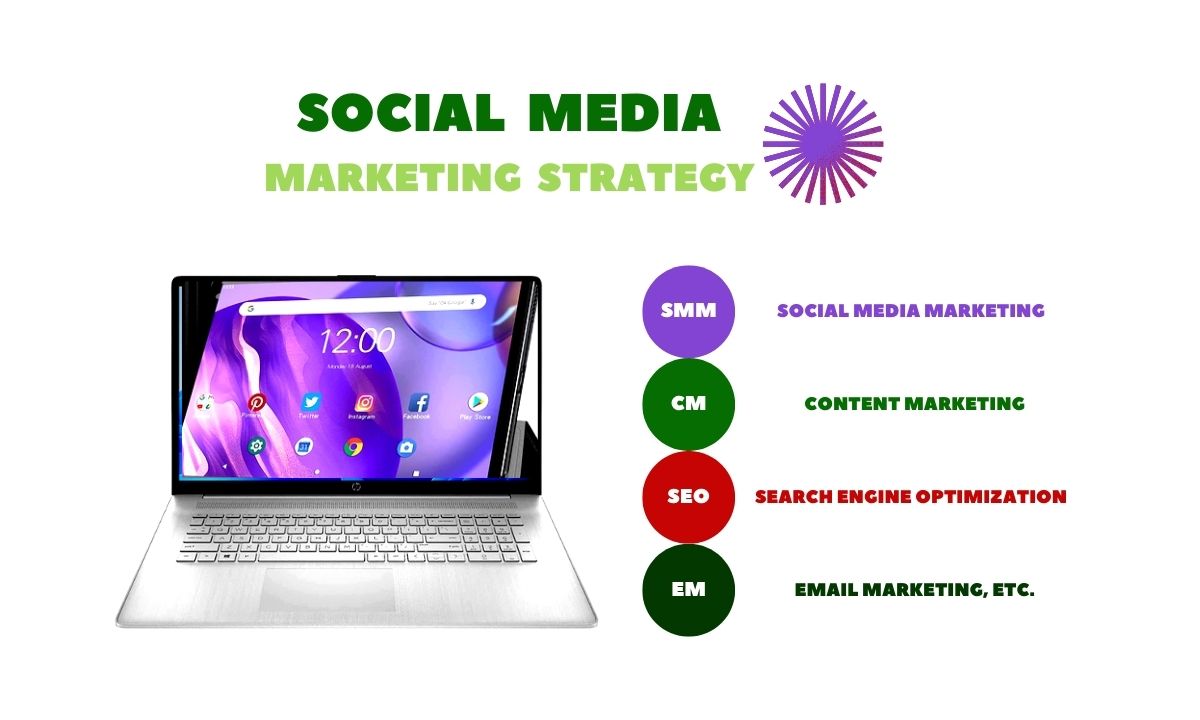
    Social media marketing, also known as digital marketing, electronic marketing, or online marketing, is described as the act of using social media network to sell, market, or promote a brand, product, or service. It represents the use of online platforms to promote a trade or service. Whereas social media marketing strategy is a document that delineate the intended goals and tactics, including the metrics designed to monitor and measure performance for the purpose of marketing a company’s products or services to its target audience. To be effective, the social media strategy should be consistent with the company’s overall marketing strategy. The social media marketing strategy if implemented accordingly, has overarching benefits of helping businesses or individual to:


    • Increase brand awareness and recognition
    • Sell products or services
    • Build enhanced social media community networks
    • Market product or service to target audience
    • Monitor brand, product, or service performance using the right tools and re-strategize when necessary to achieve the intended goal.

    Procedures for Developing Social Media Marketing Strategy

    The 21st century businesses are driven by digitization and companies must adapt quickly to changing circumstances in the marketplace. Otherwise, a company may become laggard relative to its competitors. Digital transformation has enhanced our social interaction, including the way we conduct business.

    In today’s business environment, it is very common among consumers to visit online to research about a potential product or service before making buying decision. For this purpose, it is essential for companies to strive to improve its digital footprints across multiple social networks.

    The following are the underlying procedures for developing social media marketing strategy, including:

    • Determine a social media marketing goal to be achieved, and this should be consistent with the overall corporate objective of the organization. The social marketing goal should be specific, measurable, attainable, relevant and time bound. It should also be unique and complement the overall strategic marketing goal.


    • Establish a social media budget. Company should develop a budget with which it can run the social media activities. Social media marketing is a viable undertaken that require financial resources. The requisite limited scarce financial resources should be allocated in a judicious and efficient manner across the identified social media accounts. More resources should therefore be allocated to or spend on social media account that generate or have the potential to achieve the highest revenue or increase brand awareness and reputation.


    • Identify and evaluate the company’s target audience profile including their demographic, psychographic, geographic, and behavioral tendencies. The social media marketing activities should be channelled to customers who are more likely to buy or patronize the company’s product or service. However, the product or service should reflect the current market needs and be distributed and promoted to the target audience at the right price and quality to generate increasing sales. The areas of interest of the target audience should be identified and the marketing campaign efforts should then be directed towards satisfying the identified interests.


    • Identify the most relevant metrics. The social media marketing strategy should be designed to identify the most relevant metrics, particularly the ones that produce the best result. More attention should then be given to the metrics that are consistent with the intended goal. Thus, more resources should be directed to improving the metrics on a going concern basis to get the best and consistent result.


    • Carry out competition analysis to identify major rivals, best practices, and spot opportunities. Competition analysis is intended to help identify and understand the strengths and weaknesses of comparable companies operating in the same industry. This is premised on the believe that the company’s rival will adopt similar social media marketing strategy. Therefore, the company should know what the competitions are doing on social media, whom they are targeting, and the kind of phrases or key words they are using to attract potential customers.


    • Select the right social media network. Company will need to create social media accounts including Facebook, Instagram, Twitter, Pinterest, LinkedIn, Google my business, etc. depending on the intended goals to be achieved and manage each effectively. The top six (6) social networks with monthly active users as of January 2022 include:
    1. Facebook: Controls the largest share of 2.9 billion users
    2. YouTube: About 2.6 billion people are actively sharing contents
    3. WhatsApp: Has a share of 2.0 billion active users from social networks
    4. Instagram: 1.5 billion people are engaging on the platform
    5. WeChat: Controls 1.3 billion users monthly
    6. TikTok: 1.0 billion are actively using the platform monthly.


         Source: Statista

    Once the social media accounts have been created, the marketing campaign and activities should be conducted, integrated, and distributed on each selected platform simultaneously, using relevant social media management tools. The selected social media platforms should be the ones that the target customers will normally use or patronize consistently.

    • Carry out social media audit for the purpose of improving on all social media efforts. This is designed to identify the social media account that is best performing or lagging and on which you will need to re-strategize to get the desired result.


    • Develop compelling contents including images and videos that generate lead. To generate sufficient lead, company should develop the habit of sharing quality and compelling social media contents on a regular basis. Any social media account without the requisite contents will be too boring and will not attract the needed visit to generate increasing revenue or create brand awareness depending on the intended goal to be achieved. The content to be shared can be a combination of entertaining and informative items and should resonate with the target audience. In today’s digital age, compelling social media contents have the capabilities of generating value for a business. This is because it allows the company to clearly communicate its message and demonstrate their best of ability to promote the products or services.


    • Track performance of social media activities by monitoring and collating promotional campaign data using relevant tools including Google Analytics, exactmetric, GTmetric etc. to assess customer behavior, patterns, demographics, psychographics etc. in relation to social media campaign activities.

    At Greena, we pride ourselves with highly experienced and committed professionals willing and ready to collaborate with businesses to create value

    SIGN UP below to receive compelling articles to improve your business

    info@greenapartners.com

    +234 (0) 901 610 3132
     

    Postal Code: 100213

    74 Ogunnusi Road, Ojodu Ikeja, Lagos

  • Security Threats to E-commerce

    Security Threats to E-commerce

    Security Threat

    Security Threats To E-commerce

    Security threats are waxing and becoming challenging to deal with. Hence, there is need for online participants to protect their operations against possible cyber-attack. The cyber attackers target e-commerce sites and vendors for the purpose of exploiting material information, stealing, and fraud. Hence, understanding of possible security threats to e-commerce business is vital to devise protective measures against attack. Common security threats to e-commerce business include the following:

    • Phishing
    • Spam emails
    • Credit and debit card fraud
    • Malware
    • Eavesdropping
    • DoS and DDoS attacks

    Phishing

    This is a kind of activity in which a hacker obtained sensitive information including credit card details, username, and password of a targeted user to maliciously compromise the system. They can use spam emails to disguise as though it was from a well-recognized organization, client, vendor, business or individual. They can also create a phishing profile that look like the login page of the targeted business, or organization’s e-commerce site and send a message to login to fix an error. Once the victim tries to login, the hacker captures the login details and use it to gain access to the real e-commerce site.


    Spam Emails

    This security threat is similar to that of malware and phishing, where the spammer usually hacks the email account of individual or organization known to their target to send spam emails. The emails are intentionally linked to an infected and phishing site that will eventually compromise the system security and the e-commerce store.


    Credit and Debit Card Fraud

    This is a serious identity theft fraud. It occurs when a criminal steals a victim’s credit or debit card details and use the details to make purchases from online stores. Once the store processes the order it will result in loss of revenue from chargeback since the card details are stolen.


    Malware

    This is a malicious code or file designed principally to cause harm to a system. The hackers may intentionally corrupt a target company’s server, computer network, leak private information, or gain unauthorized access to information, deprive user access to valuable information, and which may generally result in computer security breach and loss of revenue. Malware constitutes grave challenges to individuals and businesses.


    Eavesdropping

    This represents the act of listening to private communication of an individual or organization without their consent, over a computer network to gather material information. Generally, eavesdropping does not interfere with the normal operations of the unsuspecting victim. It is intentionally done to steal information. The hacker relies on unsecured network communications to gain access to information that is being transmitted between devices.


    DoS and DDoS attacks

    Denial of service (DoS) attack is a cyber-attack in which the hacker seeks to make a network resource unavailable to its users by flooding the target URL with excessive requests that it cannot handle. During the attack, the regular traffic on the website will be temporarily down, slow, or completely interrupted. Whereas distributed denial of service (DDoS) attack is the one in which the incoming traffic flooding the victim website originates from several sources at the same time. A DDoS attack is typically generated using thousands of unsuspecting zombie machines.

    At Greena, we pride ourselves with highly experienced and committed professionals willing and ready to collaborate with businesses to create value

    SIGN UP below to receive compelling articles to improve your business

    info@greenapartners.com

    +234 (0) 901 610 3132
     

    Postal Code: 100213

    74 Ogunnusi Road, Ojodu Ikeja, Lagos

  • E-commerce: Meaning & Development

    E-commerce: Meaning & Development

    E-commerce: Meaning & Development

    E-commerce represents transaction conducted over the internet in relation to buying and selling of goods and services. It is designed to facilitate commercial activities using enabling technologies including mobile app, internet marketing, online transaction processing, electronic funds transfer, inventory management systems, supply chain management, electronic data interchange, and automated data collection systems. 

    Generally, e-commerce business transactions are categorized as business-to-business, business-to-consumer, consumer-to-consumer, and consumer-to-business and can be conducted on any devices including smartphones, tablets, computers, or any other devices.

    Barriers to E-commerce

    The main barriers to e-commerce adoption include:

    • Data and cyber security breaches over personal and credit card information
    • Inability to physically check and examine the product before buying
    • Inadequate skills to navigate and interact with internet
    • Lack of requisite infrastructure on information and communication technology
    • Competition
    • Lack of consumer trust on the online seller
    • Inability to convert visitors or shoppers into paying customers
    • Product return and refund policies.

    Requirements for the Implementation of E-commerce Website

    To ensure good outcome for the development and implementation of the e-commerce website, the requisite resources should include the following:

    • Capital Outlay
    • Computer Devices
    • Internet Connection
    • Technical Staff
    • Online Payment Integration
    • Well-Designed Website


    Capital Outlay

    The required funds for the implementation of e-commerce site must be readily available. To develop an e-commerce website, funds will be needed to purchase domain name registration and hosting, computer devices, pay salaries to staff, provide 3rd party integration system, software etc. Therefore, it will be difficult to proceed with the website creation if the requisite financial resources are not available.


    Computer Devices

    This is the one of the primary resources needed for building e-commerce website. Without computer system there will be no way the site will be showcase or seen online. The computer devices could range from mobile phone, tablet, laptop, or computer monitor. The computer system is the medium through which the e-commerce transaction can take place and integrate with the internet. It is the computer or laptop that will be used to develop the e-commerce website.


    Internet Connection

    For the e-commerce to be able to communicate with the visitors or customers, it will need a high quality and super-fast internet connection. The internet controls the activities of the e-commerce, and it represents the enabler for the e-commerce transactions. Such that if the internet is not stable it will slow down the loading and extend the time required to perform a transaction beyond necessary. This could be frustrating especially when there is need to quickly attend to customer request online.


    Technical Staff

    A dedicated workforce will be needed to provide online technical support to customers, resolving issues, updating, and providing maintenance activities to the site. The technical staff must be capable and experienced in working with computer networks and the internet operations, including possessing good customer relations.


    Online Payment Integration

    Arrangements should be made with online payment vendors including banks, credit cards agencies to facilitate electronic payment and receipt transactions. Multiple payment platforms including Paystack, PayPal, Flutterwave, Stripe etc. should be integrated to enhance shoppers’ online experience. 


    Well-Designed Website

    A mobile responsive website is required for a successful implementation of e-commerce. Most of the transaction done online are through mobile phone. Therefore, it is essential to ensure that the site is optimized for mobile devices, including phones, tablets etc. Creating a mobile-friendly and responsive design is one of the best ways to drive more mobile traffic to the e-commerce site.

    E-commerce Website Design & Development

    This is the creation of e-commerce website for the purpose of buying and selling of goods and services over the internet. The primary goal of e-commerce is to generate lead to increase sales and maximize profit. E-commerce development process is the same for businesses or entities on a global scale. Hence, to develop an e-commerce website, the following should be taken into consideration:

    • Establish a social media marketing strategy
    • Choose an e-commerce website name
    • Develop the e-commerce site


    Establish a social media marketing strategy

    The social media marketing plan is a document that outline the predetermined goals and strategies, including the metrics designed to monitor and measure performance for the purpose of marketing a company’s products or services to the target audience. The social media strategy should include the following:

    • Determine a social media marketing goal to be achieved
    • Establish a social media budget
    • Identify and evaluate the company’s target audience persona
    • Identify the most relevant metrics
    • Carry out competition analysis to identify major rivals, best practices, and spot opportunities
    • Select the right social media network
    • Carry out social media investigation or audit for the purpose of improving on all social media efforts
    • Develop compelling contents including images and videos that generate lead
    • Track performance of social media activities by monitoring and collating promotional campaign data using relevant tools including Google Analytics, Exactmetric, GTMetrix etc.


    Choose an e-commerce website name

    The e-commerce site must have a unique and identifiable name with which it can transact with. To achieve this, the company will need to search for suitable and available name that has never been used by anyone. Once the name has been selected, the company will need to register and host the domain name by a hosting company, so that visitors or customers can use it to enter a company e-commerce website.


    Develop the e-commerce site

    Building an e-commerce website can be done through several open-source content management system platforms including WordPress, Drupal, Joomla etc. The open-source management system makes it easier for organizations to develop and manage digital contents. In building an e-commerce website, the following functionality should be considered:

    • Aesthetic Design. The website should be aesthetically designed in such a way that will be appealing and attractive to visitors or customers. To achieve best design, the appearance and theme should be choicely selected. All the relevant widgets and plugins that are intended to improve the functionality of the site should be given high consideration. The responsiveness of the site should also be given high priority so that visitors or customers can access the site through any devices including mobile phone, tablet, laptop etc. to enhance their user experience. Research has shown that more visitors or customers are shopping online through mobile devices. Hence, it is essential that the website is mobile responsive and geolocation technology can be added to make it easier for customers to find the nearest store.


    • Search Engine Optimization (SEO) Capabilities. This is the process of enhancing website visibility when individual or organizations search for products or services through search engines. The better the visibility of a company’s pages in search engine, the more likely to attract attention of prospects to the company’s business. There is technical, on-page, and off-page SEO optimization. All contents to be posted on the site should be SEO driven so that they will be visible to potential customers or prospects. Doing this will make the company’s products or services to be organically ranked, especially on Google search engine.


    • Site Speed. The site speed should be improved for better customer experience. If an e-commerce site is taken too long to load, it may prompt the potential or existing customers to change their minds by leaving the site and shop at the nearest store. Relevant plugins can be installed to optimize the site speed. Fast loading e-commerce site will enhance SEO ranking on Google.


    • Product & Store Management. The products should be well arranged and labeled. Product name, price and description should be added. The product description is a vital part of e-commerce website. This is because it provides the opportunity to tell the customers about the features, measurements, colors, textures, and underlying benefits of the product. The product image content should be a mix of entertaining and informative items. This is because the product content should resonate with the visitors or customers. In today’s digital age, compelling image contents have the capabilities of attracting and appealing to customers. The size of the product image should be the same across the online store. The site should possess the functionality of editing and adding new product and the ability to track inventory so that customer demand can be met always.


    • Payments and Checkout. The payment methods should be flexible and user friendly. Hence, the right payment method is vital for closing a deal. If the method is too cumbersome, the customer could abandon the cart and never return. Also, the payment method should be consistent with the payment processing needs. Payment gateways should be embedded on the e-commerce site. In the digital age, multiple payment gateways can be integrated to make the site more user friendly. It is generally believed that flexible and seamless payment options speed up the decision-making process and enable customers to even spend more on the online store.


    • Security (Data Protection & Privacy). Online transaction and payment involved dealing with sensitive data including customer phone number, credit card details, and other payment details, which proffer additional responsibility on the e-commerce store to handle sensitive information with more care. Adequate security should be embedded on the site to protect customers or visitors’ details. Otherwise, there could be loss of customer confidence and the company may be liable to fines, penalties, or litigation in case of any breach of security. At a minimum, the e-commerce site can be integrated with an SSL certificate, and the information properly encrypted to prevent unauthorized access to the site from hackers.


    • Integrations. The e-commerce platform should be integrated with the right and relevant plugins for better functionality. This will enable the site to be well customized as intended. The e-commerce store can be backed up or integrated with a 3rd party cloud computing system to prevent any unexpected interruption or site crash. Also, for the purpose of social media marketing, the site could be integrated with the company’s email marketing system or social media accounts including Facebook, Instagram, Twitter, Pinterest, LinkedIn etc.

    At Greena, we pride ourselves with highly experienced and committed professionals willing and ready to collaborate with businesses to create value

    SIGN UP below to receive compelling articles to improve your business

    info@greenapartners.com

    +234 (0) 901 610 3132
     

    Postal Code: 100213

    74 Ogunnusi Road, Ojodu Ikeja, Lagos

  • Digital Economy: Meaning & Challenges

    Digital Economy: Meaning & Challenges

    Digital Economy

    Digital Economy: Meaning & Challenges

    Digital economy also known as new economy, web economy, or internet economy, represents business, social, cultural, and economic activities integrated by evolving technologies. It is an economy that is dependent on digital computing technologies through the internet and world wide web. The world is now a global village where everyone is expected to possess minimum basic digital skills to be able to connect and interact with others on a global scale using evolving technologies, including internet of things (IoT).

    Digital transformation has enhanced our social interaction and the way we conduct business. In today’s business environment, it is very common among consumers to visit online and research about a potential product or service before making buying decision. Prospective customers visit company’s website to check out the product or service in order to know more about the offering, including reviewing other customers’ testimonials about the product or service. They also check out social media pages, online rating and reviews, forums, etc. to find out how the company relates and engage with its audience before forming their opinions about buying from the company.

    Components of Digital Economy

    There are basically three (3) components of digital economy including:

    • E-business- i.e., conducting business electronically over the internet
    • E-commerce- buying and selling of goods and services on the internet (Online Shopping)
    • E-business infrastructure- this includes the requisite infrastructure such as hardware, software, telecommunication networks, security, human capital, and other support services for conducting e-business and e-commerce


    With the aid of digital technology, businesses can now reach out to their target audience through different marketing channels over the internet including:

    • Social media marketing e.g., Google Ad, Google my business, Facebook Ad, etc.
    • Content marketing
    • Search engine optimization
    • Email marketing
    • Website articles etc.


    Challenges of Digital Economy

    The challenges of digital economy are enormous, including:


    Huge Capital Investment

    Digital economy requires huge capital expenditure on infrastructure, software, strong telecommunication, internet, and mobile networks, including training and development costs. Budget constraint can result to push back from management due to limited scarce financial resources. Digital transformation is an expensive endeavour, but which is intended to enhance operating efficiency across all value chains and improve the return on investment of an organization. However, the non-availability of the requisite finances or capital can limit the ability of the company to adopt and integrate the needed technologies.


    Dearth of Requisite IT Skills

    Succeeding in digital transformation efforts require considerable knowledge in evolving technologies including artificial intelligence, machine learning, big data analytics, internet of things etc. To integrate technology and keep maintaining the system will require high level of expertise and technically skilled professionals which are not readily available. 


    Security Concerns

    Many organizations have high concern for privacy and cybersecurity, particularly companies operating in data-sensitive industries. Digital transformation endeavors may require organization adopting cloud computing and integrate all company’s data in a centralized system. The system vulnerabilities, poor setup, and online presence may expose the company to cybersecurity threats.


    Resistance

    Integrating new processes and technologies can result in push back from some conventional high ranked members of the organization. Lack of proper orientation, ineffective communication, fear of unknown, poor timing, organizational politics can result in resistance to the change. If there is no proper planning and communication about the change in processes, particularly from the top management, the digital transformation efforts may not materialize and hence, present heavy challenges.

    At Greena, we pride ourselves with highly experienced and committed professionals willing and ready to collaborate with businesses to create value

    SIGN UP below to receive compelling articles to improve your business

    info@greenapartners.com

    +234 (0) 901 610 3132
     

    Postal Code: 100213

    74 Ogunnusi Road, Ojodu Ikeja, Lagos